
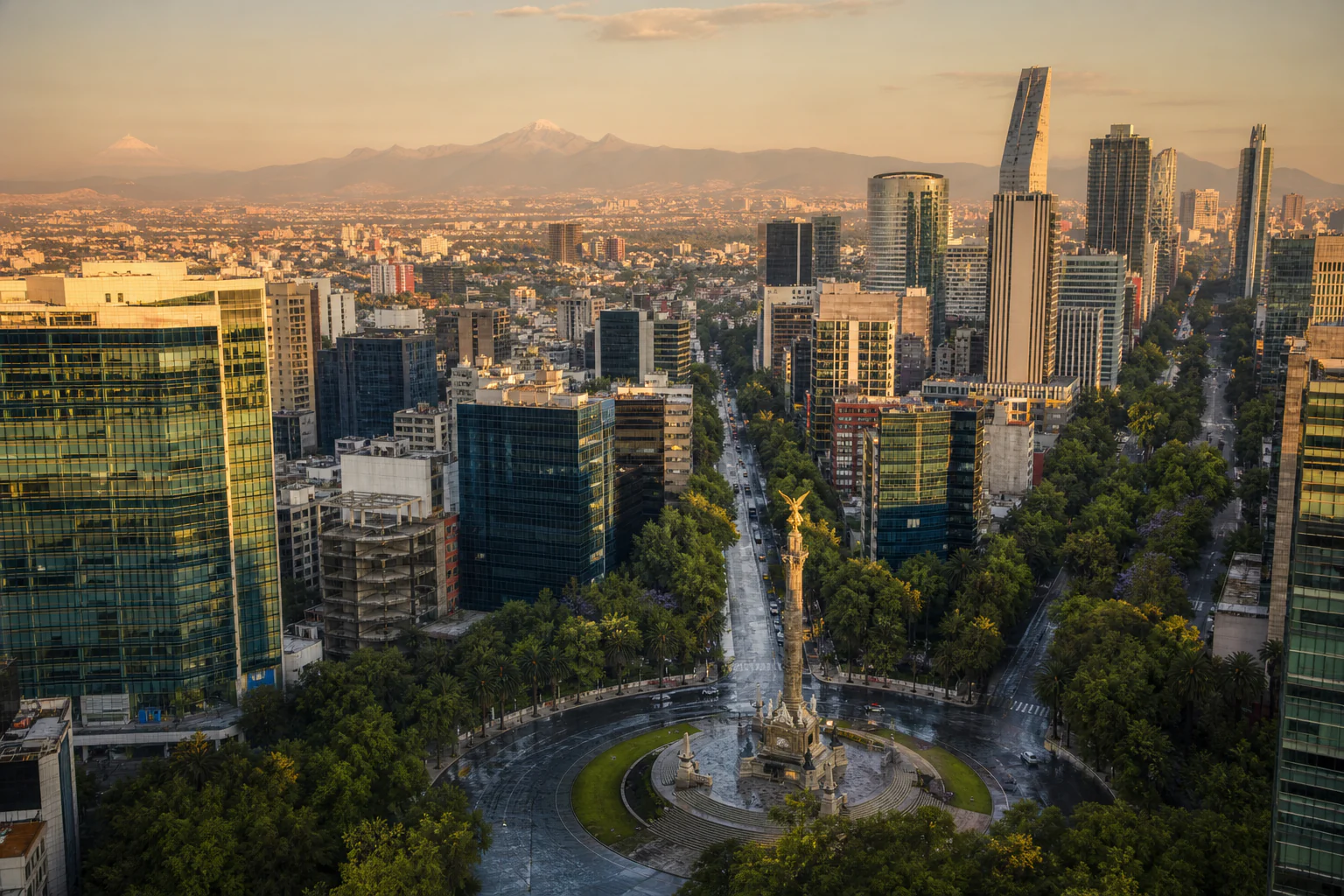
Mexico City
A high-altitude creative capital with unmatched food, culture and community, balanced by air quality and neighbourhood-level safety trade-offs.
Mexico › Mexico City
Digimad score
8.5
Excellent
Best for Food + Culture + Community
About
Mexico City is the deepest urban base in the Americas for remote workers who want more than convenience. Its museums, restaurants, parks and music would sustain years, the international community is large, and the central neighbourhoods are genuinely walkable. The city also sits at 2,240 metres: newcomers feel the altitude, dry-season air can be poor and earthquakes are a real planning concern. Roma-Condesa is easy but expensive and saturated with short-term visitors; Juarez, Escandon, San Rafael and Santa Maria la Ribera often provide a better balance. Daily life works best when home, work and social plans stay within a compact cluster because traffic can turn a cross-city trip into an hour.
Mexico City at a glance
Internet
115 Mbps median fixed, good reliability
Monthly budget
$2,800/mo comfortable, $1,450 lean
Best months
Oct, Nov, Feb, Mar
Community
Very high nomad density, good English
Key points
One of the world's great food and museum cities
Latin America's deepest remote-work and startup community
Walkable central neighbourhoods with abundant cafes and coworking
Excellent private healthcare at moderate international prices
Direct flights across the Americas and Europe
Neighbourhoods
Roma Norte and Condesa are leafy, social and easy, but now carry the highest furnished-rental premium and the strongest overtourism pressure. Juarez is denser and livelier, with excellent food and nightlife. Escandon offers a more residential version of Condesa at somewhat lower prices. San Rafael and Santa Maria la Ribera have architecture, markets and emerging cafe scenes with more local texture. Polanco is polished, secure and expensive, better for corporate convenience than street life. Coyoacan is beautiful and slower but far from the main coworking and nightlife circuit. Centro Historico is culturally extraordinary by day but block-level safety and noise vary sharply at night.
Cost of living
USD
Lean
$1,450/mo
Shared housing, local food
Comfortable
$2,800/mo
Private one-bed, coworking
Premium
$5,200/mo
Central, frequent dining
Local currency
MXN
Housing
- Studio
- $900
- 1-bed centre
- $1,450
- 1-bed outside
- $780
- Coliving room
- $750
- Airbnb monthly
- $1,900
Everyday costs
- Local meal
- $6
- Mid-range meal
- $28
- Coffee
- $4
- Groceries/mo
- $360
- Coworking day
- $16
- Hot desk/mo
- $230
- Private desk/mo
- $420
- Transit pass
- $25
- Short ride
- $6
- Gym/mo
- $55
Street food and public transport remain inexpensive, but central furnished rent has risen sharply. A local lease outside the obvious nomad districts changes the budget considerably.
Internet & connectivity
Fixed line
115 Mbps
Mobile
50 Mbps
Data plan
$25/mo
eSIM
Supported
Reliability
GoodPublic Wi-Fi
GoodPower stability
GoodFibre is common in central apartment buildings, but older properties may rely on congested cable. Ask for a current wired speed test and verify backup arrangements at coworking spaces.
Nomad community
Nomad density
Very highEnglish
GoodCoworking spaces
WeWork
$250/mo
Multiple
Homework
$220/mo
Roma Norte
Publico
$270/mo
Multiple
Languages spoken
Meeting people
Technology, founder, design, language, arts and international groups run nightly. It is easy to meet foreigners and requires more deliberate effort to move beyond that circuit.
The community is large enough for every niche, but learning Spanish and choosing locally rooted businesses makes the stay materially richer.
Safety
Emergency 911
At night
FairSolo female
FairPetty crime
FairCommon scams
Phone snatching near traffic and nightlife
Distraction theft on crowded Metro and Metrobus
Unlicensed airport taxis
Card skimming at standalone ATMs
Women travellers
Central districts are busy late, but registered ride hailing is prudent after dark and harassment occurs. Women-only Metro and Metrobus sections operate at busy times.
LGBTQ+
Zona Rosa and the wider city support one of Latin America's largest LGBTQ communities and a broad legal-protection framework.
Risk is highly local. Avoid displaying a phone at curbside, use official airport transport and ask residents about the exact blocks around a rental.
Healthcare
Consultation
$55
Pharmacies
ExcellentPublic system
Public access depends on residence and affiliation and can involve long waits.
Private care
Mexico City has the country's strongest private hospitals, specialists and English-speaking services.
Insurance
Choose cover accepted by major private hospitals and understand direct-billing rules; emergency deposits can be substantial.
Getting around
Walkability
ExcellentPublic transport
ExcellentAirports
- MEXMexico City International35 min
- NLUFelipe Angeles International75 min
Metro and Metrobus are extensive and cheap; Ecobici is excellent in central districts. Crowding and theft require care. Cross-city road trips can be extremely slow.
Climate & seasons
23°C / 10°C
Subtropical highland
Rainy season
Afternoon storms from May to October
Air quality
Ozone and fine-particle episodes are common in the dry season; check daily alerts before outdoor exercise.
Days are mild year-round and nights cool because of altitude. Homes often lack heating, so winter evenings can feel cold indoors.
All ratings
Watch out for
Housing costs and displacement pressure in Roma-Condesa
Altitude and air pollution affect some newcomers
Phone theft and opportunistic crime require awareness
Traffic makes neighbourhood choice unusually important
Earthquake procedures and alerts must be taken seriously