
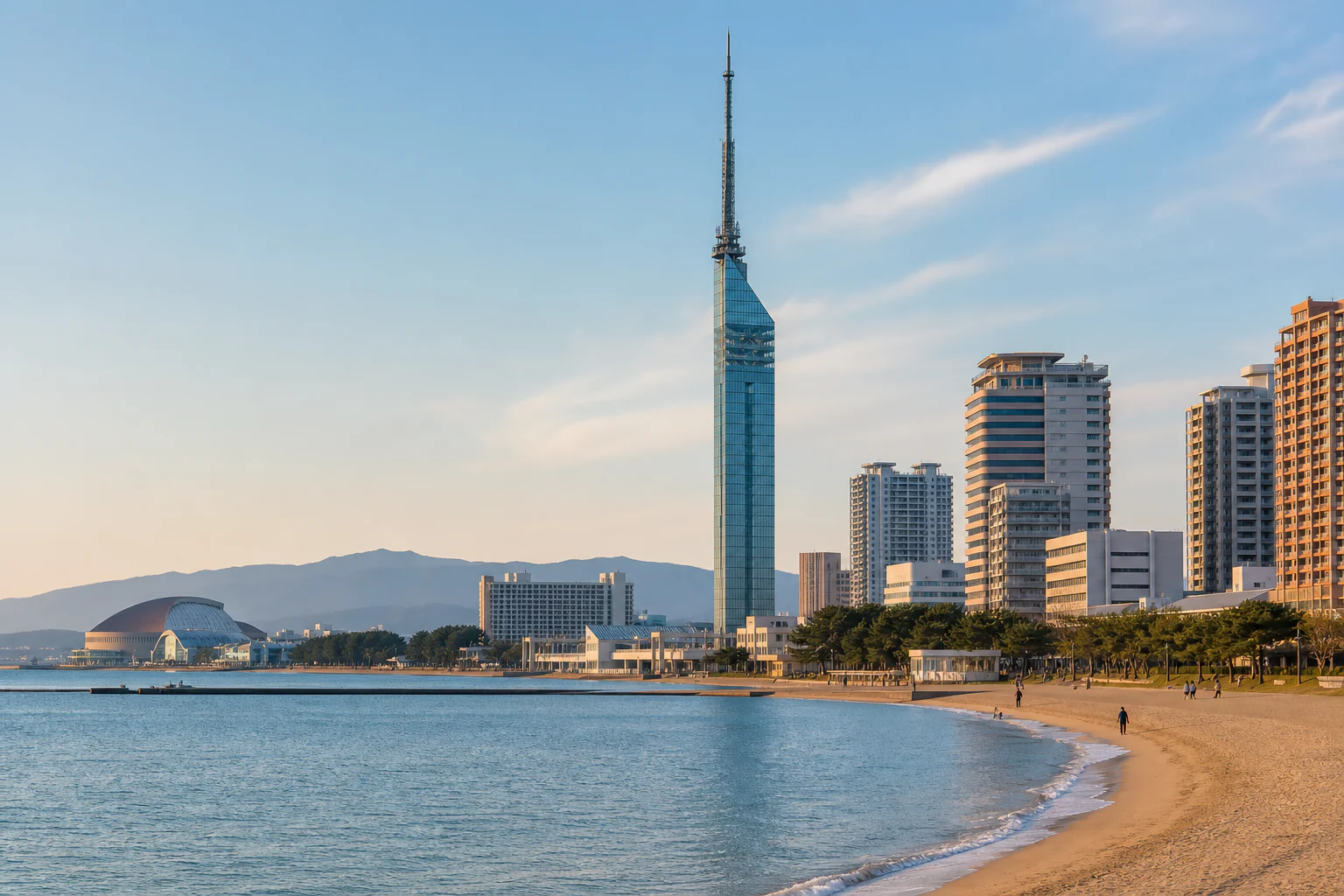
Fukuoka
Japan's easiest big city: compact, food-obsessed and ten minutes from its airport.
Japan › Fukuoka
Digimad score
8.6
Excellent
Best for Food + Compact + Startup
About
Fukuoka compresses the useful parts of a Japanese metropolis into a scale that rarely feels punishing. The airport is minutes from Hakata by subway, Tenjin and Daimyo concentrate food, nightlife and coworking, beaches sit inside the city and rents stay below Tokyo and Osaka. Kyushu's warmer climate, celebrated ramen and yatai food stalls give daily life a looser rhythm than the capital, while Korea and the rest of East Asia feel unusually close. The city has also cultivated a startup identity, though that does not translate into a large English-speaking nomad scene. You still face Japan's short-term housing friction and cash-heavy bureaucracy, and summer is hot, wet and exposed to typhoons. For remote workers who value convenience and liveability over sheer network size, Fukuoka is one of Japan's strongest bases.
Fukuoka at a glance
Internet
230 Mbps median fixed, excellent reliability
Monthly budget
$1,950/mo comfortable, $1,150 lean
Best months
Apr, May, Oct, Nov
Community
Low nomad density, fair English
Key points
The airport is roughly ten minutes by subway from Hakata station
Lower rents and shorter journeys than Tokyo or Osaka
Exceptional ramen, seafood and yatai street-food culture
Beaches, hiking and Itoshima are accessible without leaving the region
A deliberate startup programme has produced useful coworking and founder networks
Neighbourhoods
Hakata is the transport-first choice, built around the main station with newer apartments, offices and direct airport access; it is convenient rather than intimate. Tenjin and adjacent Daimyo form the social centre, dense with restaurants, bars, retail and coworking, and carry the highest central rents. Yakuin and Imaizumi sit just south of Tenjin and offer a calmer, more residential version of the same cafe-and-design culture. Nishijin gives better value near the coast and universities with a straightforward subway ride downtown. Momochi is modern, spacious and family-friendly beside the bay, but quiet at night. Itoshima's beaches and creative community are compelling for longer stays, though it lies outside the city core and is much easier with a car.
Cost of living
USD
Lean
$1,150/mo
Shared housing, local food
Comfortable
$1,950/mo
Private one-bed, coworking
Premium
$3,300/mo
Central, frequent dining
Local currency
JPY
Housing
- Studio
- $470
- 1-bed centre
- $720
- 1-bed outside
- $440
- Coliving room
- $500
- Airbnb monthly
- $1,050
Everyday costs
- Local meal
- $6
- Mid-range meal
- $17
- Coffee
- $3
- Groceries/mo
- $330
- Coworking day
- $15
- Hot desk/mo
- $150
- Private desk/mo
- $290
- Transit pass
- $50
- Short ride
- $10
- Scooter/mo
- $0
- Gym/mo
- $52
Local leases offer excellent value by Japanese big-city standards, but deposits, guarantors and furnishing make them inaccessible to many short-stayers. Monthly apartments can double the underlying rent. Everyday meals and transit remain predictable and reasonable.
Internet & connectivity
Fixed line
230 Mbps
Mobile
88 Mbps
Data plan
$24/mo
eSIM
Supported
Reliability
ExcellentPublic Wi-Fi
FairPower stability
ExcellentFibre quality is excellent, but conventional installation usually requires a resident contract and lead time. Short-stayers rely on included apartment Wi-Fi, pocket Wi-Fi or an eSIM, so ask furnished rentals for a real speed test.
Nomad community
Nomad density
LowEnglish
FairCoworking spaces
The Company Canal City
$165/mo
Hakata
Fukuoka Growth Next
$130/mo
Daimyo
DIAGONAL RUN FUKUOKA
$155/mo
Tenjin
Languages spoken
Meeting people
Founder events, university groups and language exchanges provide more structure than the city's nomad population would suggest. Japanese ability still makes the difference between an international bubble and a local network.
Fukuoka's startup positioning is real, but most activity is Japanese-first. The community rewards a longer stay and repeated attendance rather than instant nomad socialising.
Safety
Emergency 110 (police), 119 (fire and ambulance)
At night
ExcellentSolo female
ExcellentPetty crime
ExcellentCommon scams
Bar touts in Nakasu leading to inflated bills
Unstated seating charges in nightlife venues
Women travellers
Extremely safe throughout the central districts and on public transport, including late in the evening.
LGBTQ+
The city is socially tolerant and has a small scene around Sumiyoshi and Hakata, but Japan still lacks national marriage equality.
Street crime is very rare. The meaningful risks are summer heat, cycling collisions, earthquakes and severe weather during the typhoon season.
Healthcare
Consultation
$48
Pharmacies
ExcellentPublic system
National Health Insurance requires residency registration, which Japan's digital nomad status does not provide.
Private care
Medical quality is high and routine treatment is moderately priced. English support exists at major hospitals but is less systematic than in Tokyo.
Insurance
Short-stayers pay the full bill, so keep private insurance that satisfies Japan's visa requirements and includes repatriation. Ask an interpreter service before complex appointments.
Getting around
Walkability
ExcellentPublic transport
ExcellentAirports
- FUKFukuoka Airport12 min
Three subway lines, frequent buses and a compact flat centre make car-free life easy. Cycling is practical, Hakata anchors Kyushu's rail network and the airport's urban location is exceptional. An IC card works across local transport and most of Japan.
Climate & seasons
21°C / 13°C
Humid subtropical
Rainy season
The June-to-July tsuyu season brings heavy rain, followed by typhoon risk through September
Air quality
Usually good, though spring pollen and occasional transboundary dust or pollution affect sensitive people.
Winters are milder than Tokyo's and snow is uncommon. Spring and autumn are excellent; midsummer combines high humidity, heavy rain and strong heat.
All ratings
Watch out for
English drops quickly outside hotels, transport and tourist-facing businesses
Short-term furnished housing remains scarce and expensive relative to local leases
July and August are intensely hot and humid
Typhoons and heavy summer rain can disrupt Kyushu transport