
Jeju
Korea's volcanic island base: fibre-fast, nature-rich and easier with a car.
South Korea › Jeju
Digimad score
8.3
Very good
Best for Nature + Hiking + Focused work
About
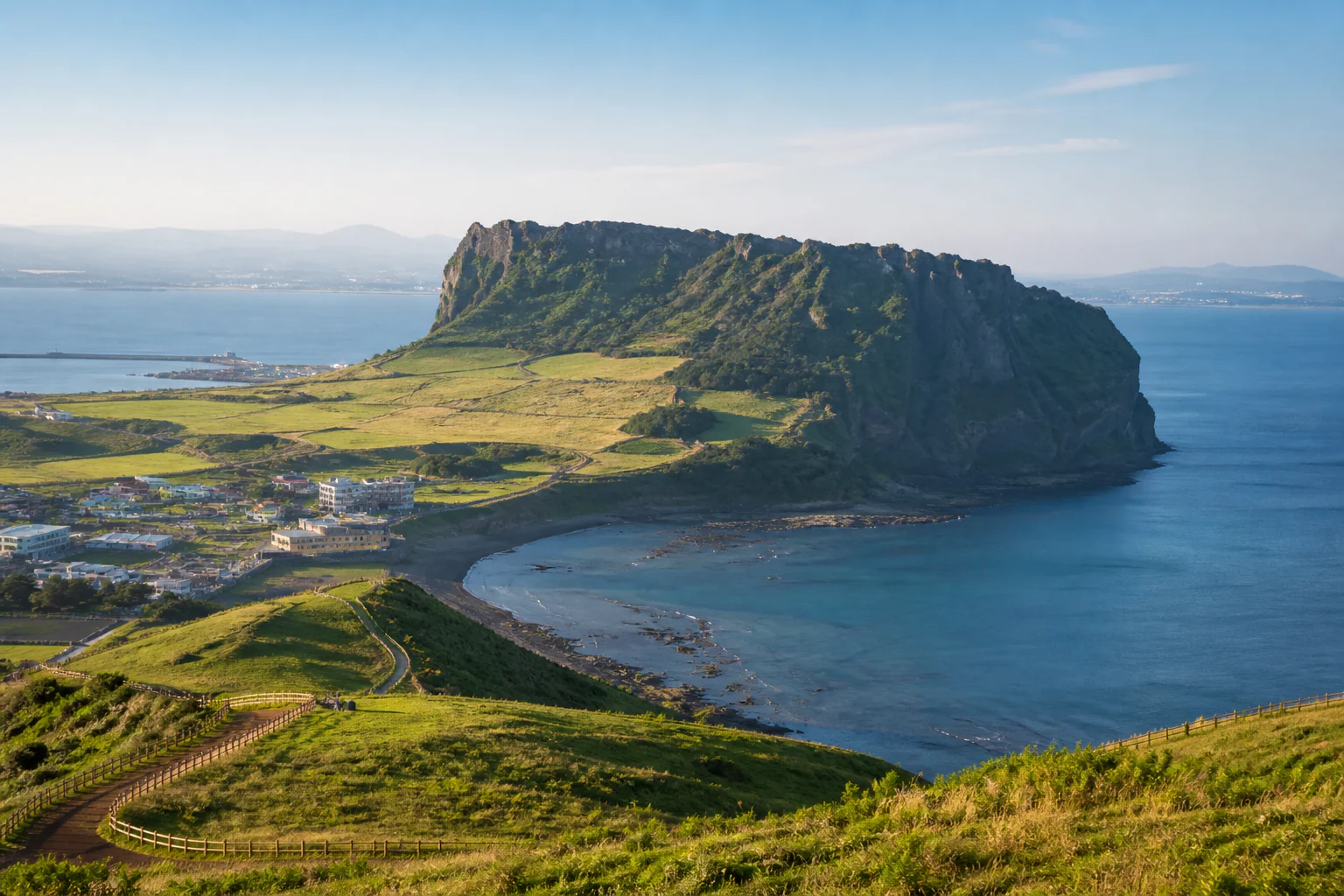
Jeju combines Korean infrastructure with an island landscape of volcanic cones, forest trails, black-rock coast and beaches. Gigabit internet reaches ordinary apartments, cafes are built for long laptop sessions and Seoul is an hour away on one of the world's busiest air routes. The island's slower rhythm and outdoor access have attracted remote workers and Korean creatives, particularly around Jeju City, Aewol and Seogwipo. It is not a tropical escape: winters are windy, summer is wet and typhoon-prone, and the island is large enough that car-free life quickly becomes limiting. English is less common than in Seoul, the international community is small and specialised healthcare sometimes requires the mainland. Jeju is excellent for self-directed workers who want hiking, diving and focused months, less so for anyone seeking dense nightlife or effortless social momentum.
Jeju at a glance
Internet
360 Mbps median fixed, excellent reliability
Monthly budget
$1,850/mo comfortable, $1,050 lean
Best months
Apr, May, Sep, Oct
Community
Low nomad density, fair English
Key points
Hallasan, oreum trails, beaches and diving are part of ordinary island life
Korean-grade fibre, mobile coverage and power reliability
Frequent flights put Seoul roughly an hour away
A strong cafe culture provides comfortable daytime work settings
Cleaner air and a slower pace than Korea's major mainland cities
Neighbourhoods
Jeju City is the practical base for the airport, hospitals, shopping and the island's largest housing supply. The old centre around Tapdong and Dongmun Market has the most character; Yeondong and Nohyeong offer newer apartments, restaurants and services. Aewol on the north-west coast is the photogenic cafe and sunset belt, popular with remote workers but spread out and busy on weekends. Seogwipo on the south coast is smaller, warmer and closer to waterfalls, diving and Hallasan's southern trails, with a quieter long-stay community. Jungmun is resort-oriented and expensive, while the east around Seongsan and Woljeong-ri offers dramatic nature with very thin everyday infrastructure. Jeju data here covers the island as the practical destination; choosing between Jeju City and Seogwipo matters more than choosing adjacent urban blocks.
Cost of living
USD
Lean
$1,050/mo
Shared housing, local food
Comfortable
$1,850/mo
Private one-bed, coworking
Premium
$3,300/mo
Central, frequent dining
Local currency
KRW
Housing
- Studio
- $460
- 1-bed centre
- $680
- 1-bed outside
- $430
- Coliving room
- $480
- Airbnb monthly
- $1,050
Everyday costs
- Local meal
- $7
- Mid-range meal
- $21
- Coffee
- $5
- Groceries/mo
- $400
- Coworking day
- $14
- Hot desk/mo
- $145
- Private desk/mo
- $280
- Transit pass
- $45
- Short ride
- $7
- Scooter/mo
- $0
- Gym/mo
- $48
Rent can undercut Seoul, but short-stay housing, island groceries, tourism pricing and a car narrow the gap. Korean leases still favour large deposits; monthly furnished accommodation carries a substantial premium.
Internet & connectivity
Fixed line
360 Mbps
Mobile
130 Mbps
Data plan
$30/mo
eSIM
Supported
Reliability
ExcellentPublic Wi-Fi
ExcellentPower stability
ExcellentApartments in Jeju City and Seogwipo commonly include very fast fibre, and mobile coverage is strong across most settled areas. Remote coastlines and mountain roads can still have weak spots, so do not rely on tethering alone from an isolated stay.
Nomad community
Nomad density
LowEnglish
FairCoworking spaces
W360
$135/mo
Jeju City
J-Space
$150/mo
Jeju City
Languages spoken
Meeting people
The community mixes Korean remote workers, tourism entrepreneurs, divers, hikers and a small group of international residents. Outdoor groups and repeated visits to the same cafes work better than expecting regular English-language nomad events.
Jeju rewards independence. Korean language ability, a car and a stable routine dramatically increase the sense of belonging outside the most visitor-oriented businesses.
Safety
Emergency 112 (police), 119 (fire and ambulance)
At night
ExcellentSolo female
ExcellentPetty crime
ExcellentCommon scams
Tourist-priced car rentals with unclear insurance exclusions
Inflated seafood prices where menus are not itemised
Women travellers
Very safe in both cities and around the island. Remote trail, coast and driving conditions deserve more planning than personal security.
LGBTQ+
Legal and generally safe but socially discreet, with a far smaller visible community than Seoul.
Street crime is exceptionally rare. Strong surf, exposed cliffs, rapidly changing mountain weather, typhoons and unfamiliar rural roads are the realistic hazards.
Healthcare
Consultation
$30
Pharmacies
ExcellentPublic system
National Health Insurance becomes compulsory after six months of residence and covers care on the same terms as elsewhere in Korea.
Private care
Jeju City has competent general and university hospitals for routine treatment and many emergencies. Rare specialties, major trauma and complex surgery may require transfer to the mainland.
Insurance
Korea's workation visa requires high-limit private cover. Make sure the policy includes air transfer to the mainland and any hiking, diving or scooter activities you plan.
Getting around
Walkability
FairPublic transport
FairAirports
- CJUJeju International15 min
Buses cover the island but frequencies and indirect routes make them slow for daily exploration. Kakao T works in the cities; rental cars are the practical default elsewhere. Flights connect constantly to Seoul and major Korean cities, while ferries serve the mainland.
Climate & seasons
20°C / 13°C
Humid subtropical maritime
Rainy season
Jangma usually arrives from late June into July, followed by typhoon risk through September
Air quality
Generally cleaner than mainland cities, though spring fine dust still reaches the island and wind conditions cause rapid changes.
The south coast is milder than Jeju City, while Hallasan creates sharp local weather differences. Winters are damp and extremely windy rather than warm; summer is humid with heavy rain.
All ratings
Watch out for
A rental car is close to essential for exploring or living outside the two cities
Wind, heavy rain and typhoons can disrupt flights and outdoor plans
The English-speaking and nomad communities are small
Advanced medical care may require travel to Seoul or Busan