
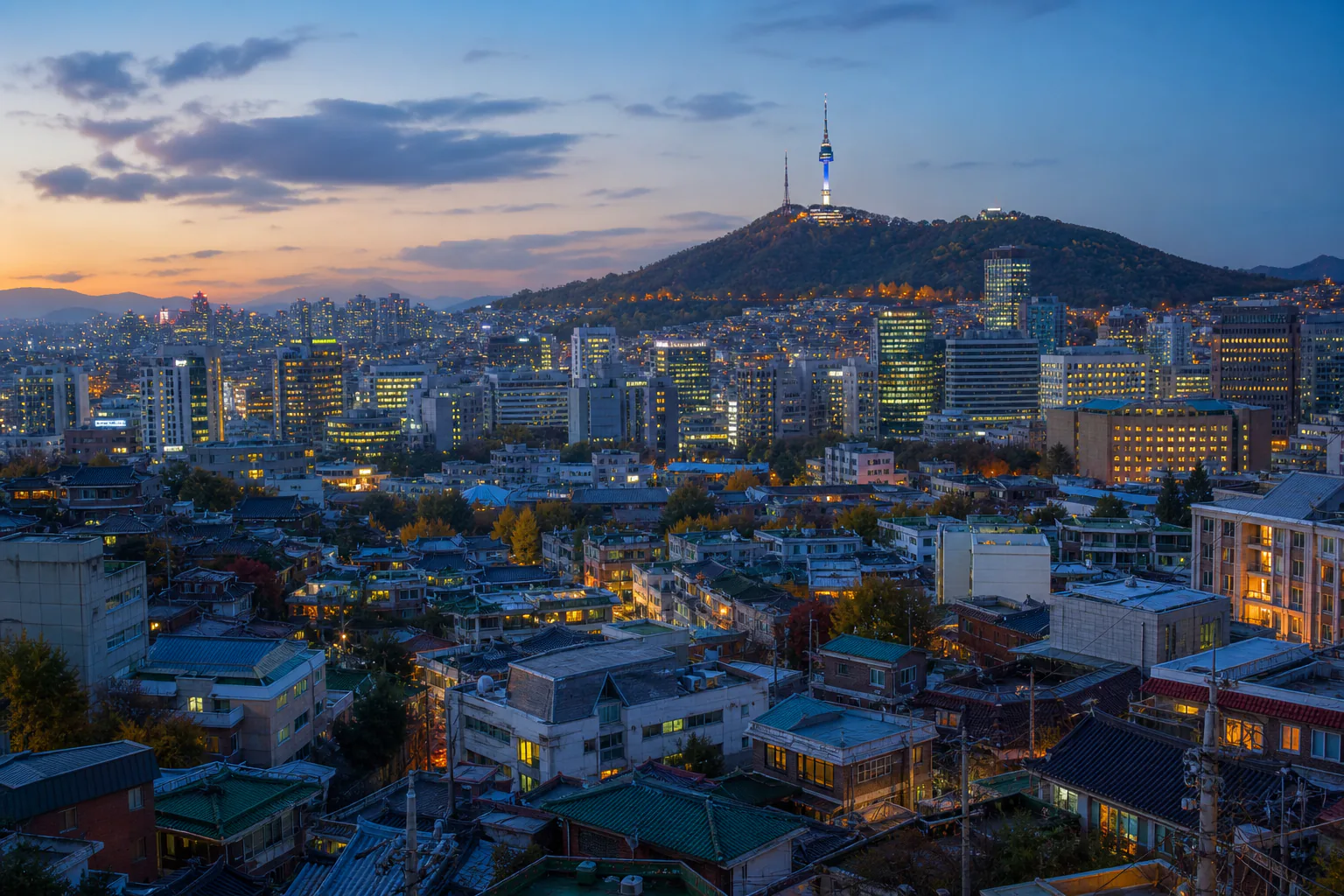
South Korea
The most digitally advanced country you can live in, with a two-year workation visa since 2024.
South Korea
Digimad score
8.6
Excellent
Best for Fast internet + Nightlife + Safety
About
South Korea runs on infrastructure that makes most of the world feel dated: gigabit fibre as a baseline, free public Wi-Fi that actually works, contactless everything, and 24-hour cafes purpose-built for people with laptops. Seoul is dense, walkable, extremely safe and open at hours no European city matches. The F-1-D workation visa introduced in 2024 gives up to two years, which is longer than Japan's six months and comes with proper residence registration. The obstacles are cultural rather than logistical: the language barrier is steep, the working culture is intense in a way that shapes the whole society, and the nomad community is thin compared with Southeast Asia. Costs sit between Japan and Southeast Asia, closer to southern Europe than to Bangkok.
South Korea at a glance
Internet
400 Mbps median fixed, excellent reliability
Monthly budget
$2,200/mo comfortable, $1,300 lean
Best months
Apr, May, Sep, Oct
Community
Low nomad density, fair English
Key points
Among the fastest and most universally available internet in the world
The F-1-D workation visa runs one year and extends to two, with residence registration
Seoul is a genuine 24-hour city: cafes, gyms and restaurants open through the night
Public transport is cheap, clean and covers the whole metropolitan area
Healthcare is excellent and inexpensive, and long-stay visa holders can join national insurance
Essentials
Capital
Seoul
Currency
KRW
Languages
Korean
Visa paths
3
Visa options
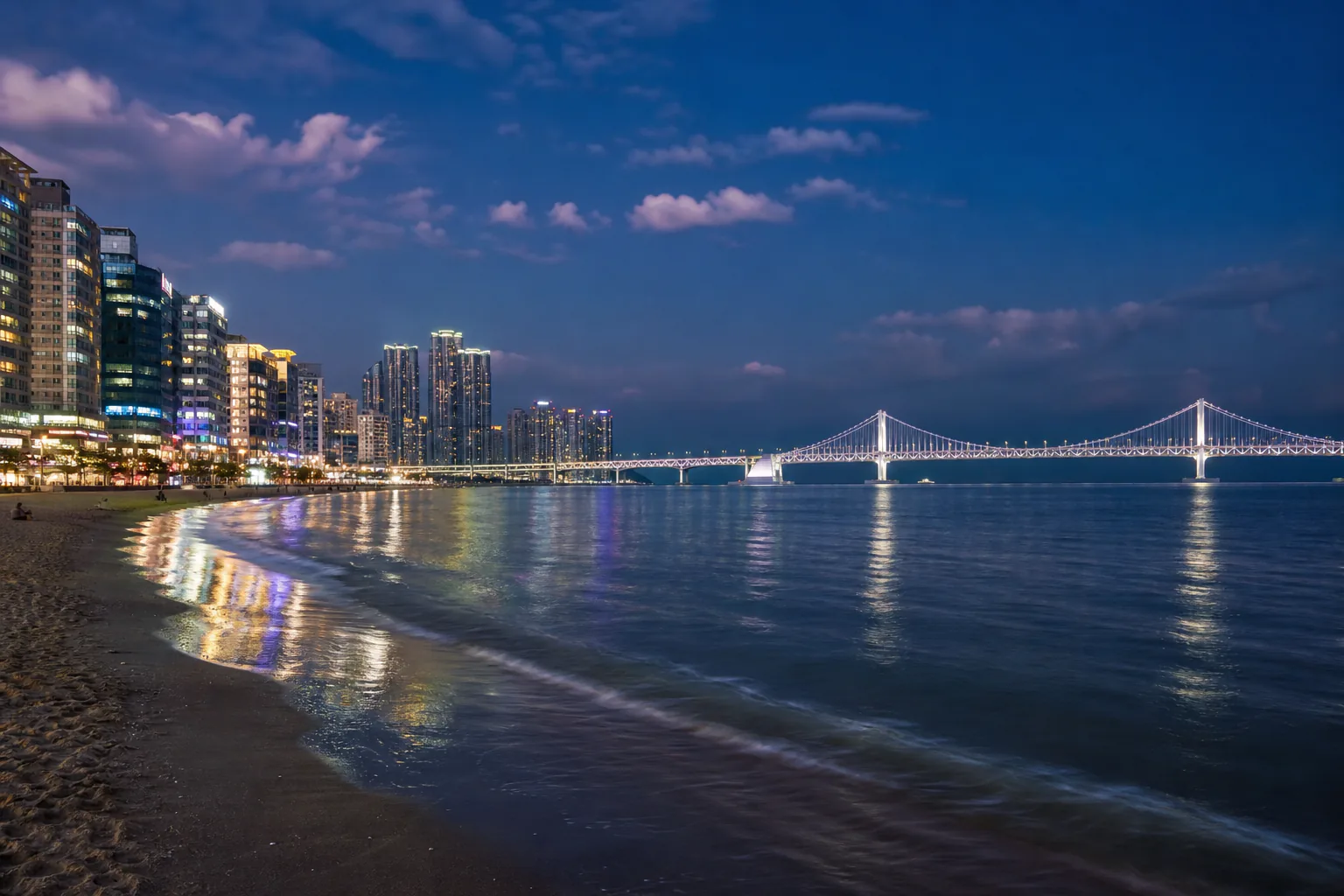
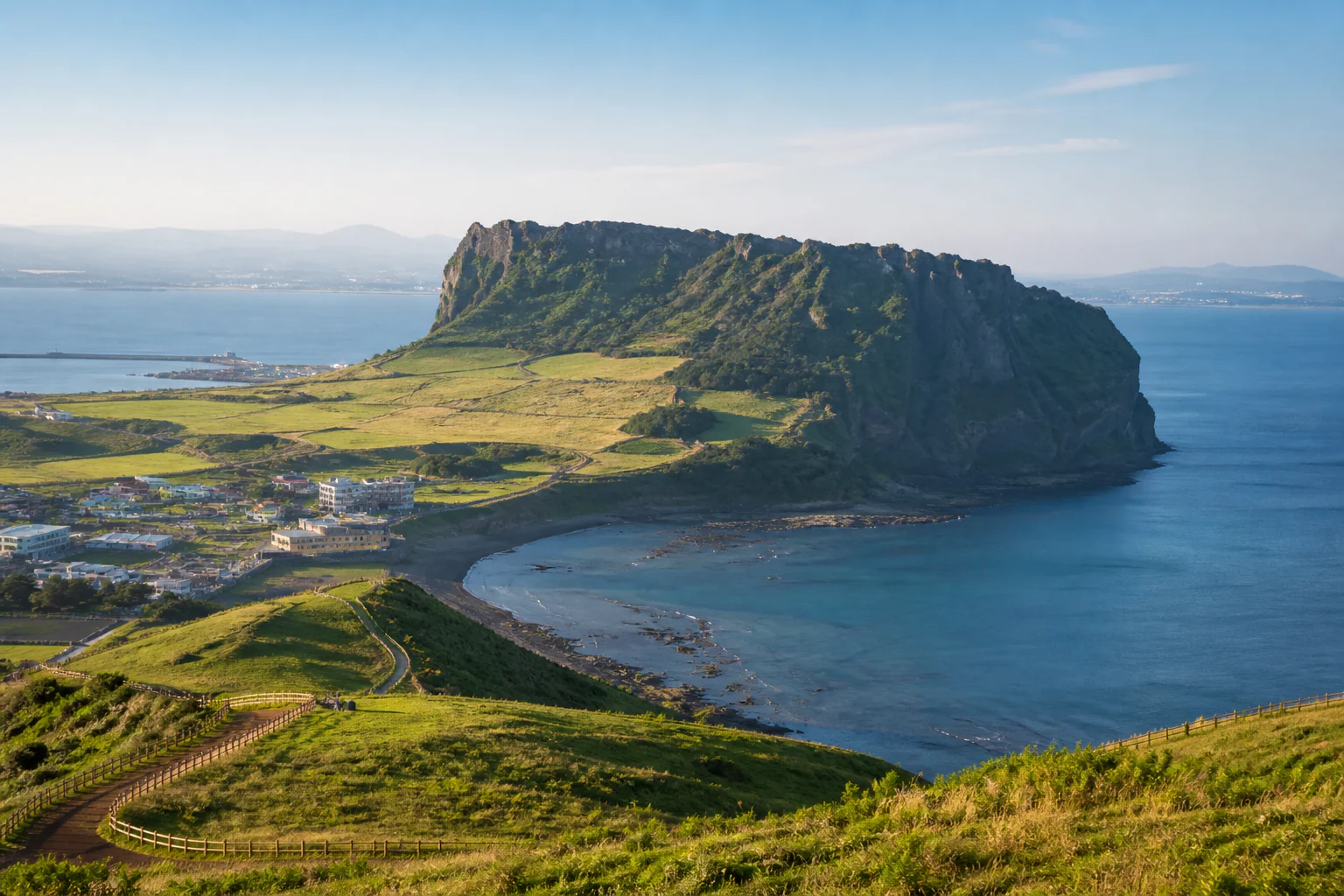
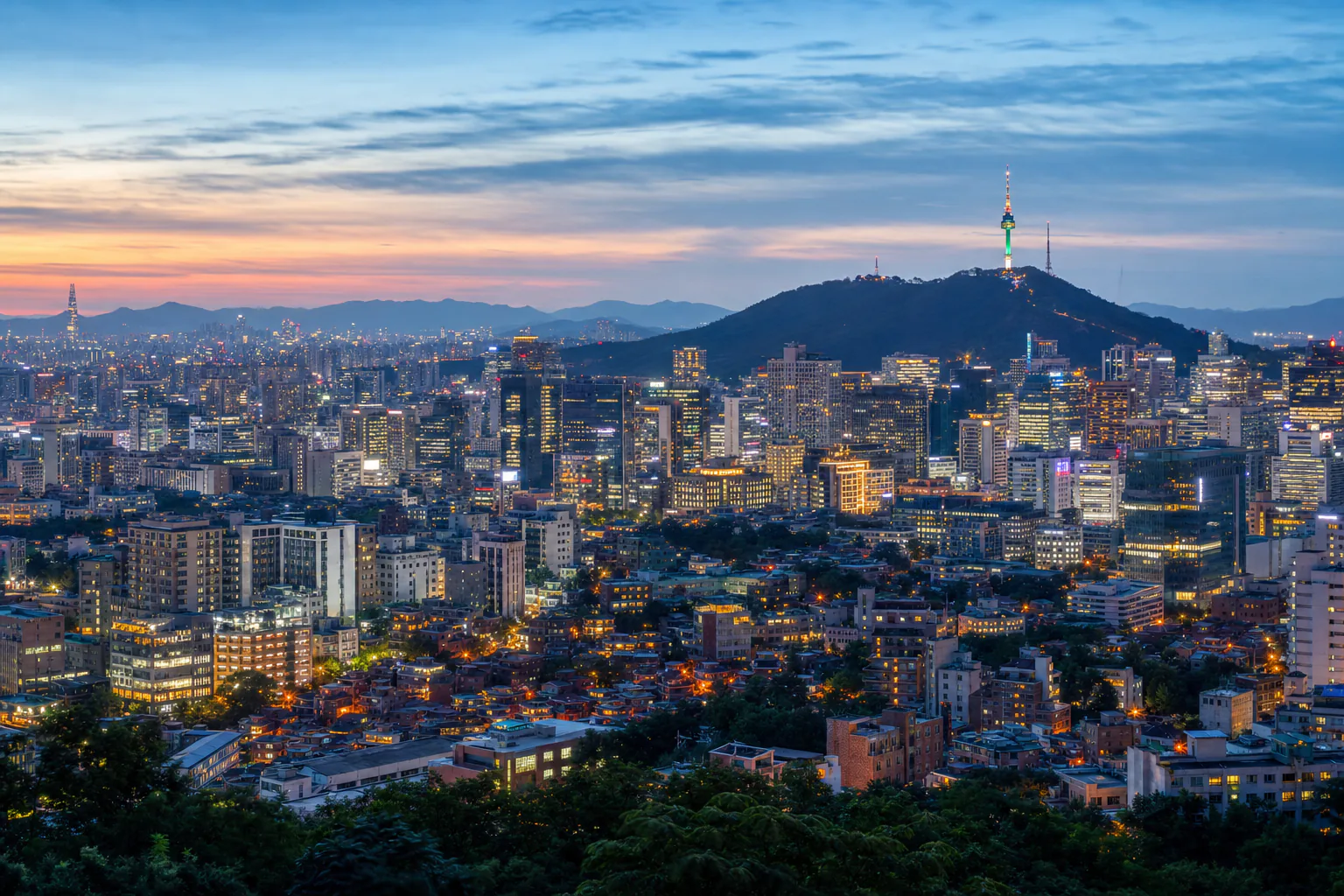
Cities in South Korea
Cost of living
USD
Lean
$1,300/mo
Shared housing, local food
Comfortable
$2,200/mo
Private one-bed, coworking
Premium
$3,900/mo
Central, frequent dining
Local currency
KRW
Housing
- Studio
- $650
- 1-bed centre
- $950
- 1-bed outside
- $600
- Coliving room
- $600
- Airbnb monthly
- $1,300
Everyday costs
- Local meal
- $7
- Mid-range meal
- $20
- Coffee
- $4
- Groceries/mo
- $420
- Coworking day
- $18
- Hot desk/mo
- $180
- Private desk/mo
- $350
- Transit pass
- $45
- Short ride
- $6
- Scooter/mo
- $0
- Gym/mo
- $55
Eating out is cheap and portions are generous, but groceries are surprisingly expensive, particularly fruit and imported goods. The real cost shock is housing deposits: even monthly wolse rentals typically require a deposit of USD 5,000-20,000, which most short-stay foreigners avoid by using serviced apartments or officetels.
Internet & connectivity
Fixed line
400 Mbps
Mobile
150 Mbps
Data plan
$30/mo
eSIM
Supported
Reliability
ExcellentPublic Wi-Fi
ExcellentPower stability
ExcellentGigabit fibre is the default rather than a premium tier, and free public Wi-Fi covers the metro, buses and most public spaces. Cafes are effectively co-working spaces, with power sockets at nearly every table.
Nomad community
Nomad density
LowEnglish
FairCoworking spaces
WeWork
$260/mo
Seoul (many locations)
FastFive
$220/mo
Seoul
Largest Korean-owned network
Heyground
$190/mo
Seoul, Seongsu
Social-impact and startup focus
Workation Jeju hubs
$120/mo
Jeju Island
Languages spoken
Meeting people
The foreign community centres on Itaewon and Hongdae and is dominated by English teachers and corporate transferees. Startup and creative meetups happen in Gangnam and Seongsu, mostly in Korean. Jeju has an emerging workation scene actively promoted by the provincial government.
Integration takes Korean. Apps for delivery, banking, taxis and property are mostly Korean-only and often require a local phone number to register.
Safety
Emergency 112 (police), 119 (fire and ambulance)
At night
ExcellentSolo female
ExcellentPetty crime
ExcellentCommon scams
Taxi drivers taking longer routes from the airport
Cult recruiters approaching foreigners in Hongdae and Myeongdong
Overcharging at unlisted-price tourist restaurants
Women travellers
Extremely safe, including walking alone late at night. Hidden-camera crime has been a recognised issue in public facilities, and the government runs regular inspection programmes.
LGBTQ+
Legal but socially conservative, with no anti-discrimination protection or partnership recognition. Itaewon has an established scene, and Seoul Pride is large, but public attitudes lag the region's more liberal cities.
One of the safest countries in the world for street crime. Leaving a laptop on a cafe table while you order is normal behaviour here.
Healthcare
Consultation
$35
Pharmacies
ExcellentPublic system
National Health Insurance is compulsory for foreigners resident six months or more and is excellent value, typically USD 100-150 a month with most treatment covered at 70%.
Private care
Even without insurance, care is affordable and fast. A specialist consultation runs USD 30-60 and same-day appointments are normal. Dermatology and dentistry are notably good value.
Insurance
The workation visa requires private insurance covering KRW 100 million, around USD 75,000. Once resident for six months you are enrolled in National Health Insurance automatically, which is better value than most private policies.
Getting around
Walkability
ExcellentPublic transport
ExcellentAirports
- ICNIncheon International60 min
- GMPSeoul Gimpo30 min
- PUSBusan Gimhae40 min
- CJUJeju International15 min
The Seoul metro is among the best in the world: 23 lines, English signage, mobile coverage in the tunnels and fares around USD 1. A T-money card covers metro, buses and taxis nationwide. KTX high-speed rail reaches Busan in under three hours.
Climate & seasons
17°C / 7°C
Humid continental with monsoon influence
Rainy season
Jangma monsoon from late June to late July, followed by typhoon risk in August and September
Air quality
Fine dust from March to May is the main environmental complaint, combining local emissions with transboundary dust. Many residents check the daily index before going out and keep an indoor purifier.
Four distinct seasons. Spring and autumn are excellent; summer is hot, humid and wet; winter is cold and dry, with Seoul regularly at minus 10C.
All ratings
Getting in
Most Western passports enter visa-free for 90 days. Visa-free travellers normally need a K-ETA electronic authorisation, though Korea has repeatedly granted temporary exemptions to specific nationalities, so check the current position for yours before booking. Arrivals also complete the Q-Code health declaration.
Visa run options
Tokyo, Osaka, Fukuoka and Taipei are all under two and a half hours and inexpensive
The F-1-D workation visa runs one year and extends to two, removing the need for runs
Jeju Island has its own visa-free entry rules for some nationalities that do not qualify on the mainland
Tax
Residency threshold
183 days
per calendar year
Income tax
6-45% national, plus 10% local surtax on the income tax amount
Territorial system
No
Foreign income
Korean tax residents are taxed on worldwide income, with an important exception: a foreign national who has been resident in Korea for five years or less out of the previous ten is taxed on foreign-sourced income only to the extent it is paid in Korea or remitted into Korea.
For nomads
The five-year concession makes Korea materially more attractive for a two-year workation stay than the headline worldwide-income rule suggests. Keep foreign earnings in foreign accounts and take advice before remitting.
Social security
National Pension and Health Insurance apply to foreign residents, though pension contributions may be refundable on departure depending on your nationality's treaty position.
Informational only, not tax advice. The five-year rule and the treaty position on pension refunds both merit professional review.
Practicalities
Timezone
Asia/Seoul
Drives on
Right
Voltage
220V / 60Hz
Plug types
Payments
Almost entirely cashless. Cards work everywhere including street stalls, and domestic apps such as KakaoPay and Naver Pay dominate. Foreign cards work in most places but fail in some Korean-only apps.
Tipping
Not practised. Do not tip.
Banking
Opening an account requires an Alien Registration Card, obtainable with the workation visa. A local phone number is the gate to most Korean apps, so get a SIM contract early.
Alcohol
Legal from 19, cheap, and central to social life. Drinking in public parks is permitted and common.
Local customs
Age and seniority shape interaction. Use two hands to give and receive, remove shoes indoors, and expect direct questions about age and marital status early in a conversation.
Watch out for
Spring fine dust and yellow-dust events push air quality into unhealthy ranges
English is limited outside central Seoul, and Korean-only apps dominate daily life
Housing usually demands jeonse or wolse deposits that run into thousands of dollars
Winter in Seoul drops well below freezing from December to February
The nomad community is small; most foreigners you meet are teachers or corporate expats
Sources
published- Korea Visa PortalMinistry of Justice, Republic of Korea2026-07-27
- K-ETA official siteKorea Immigration Service2026-07-27
Last reviewed 2026-07-27