
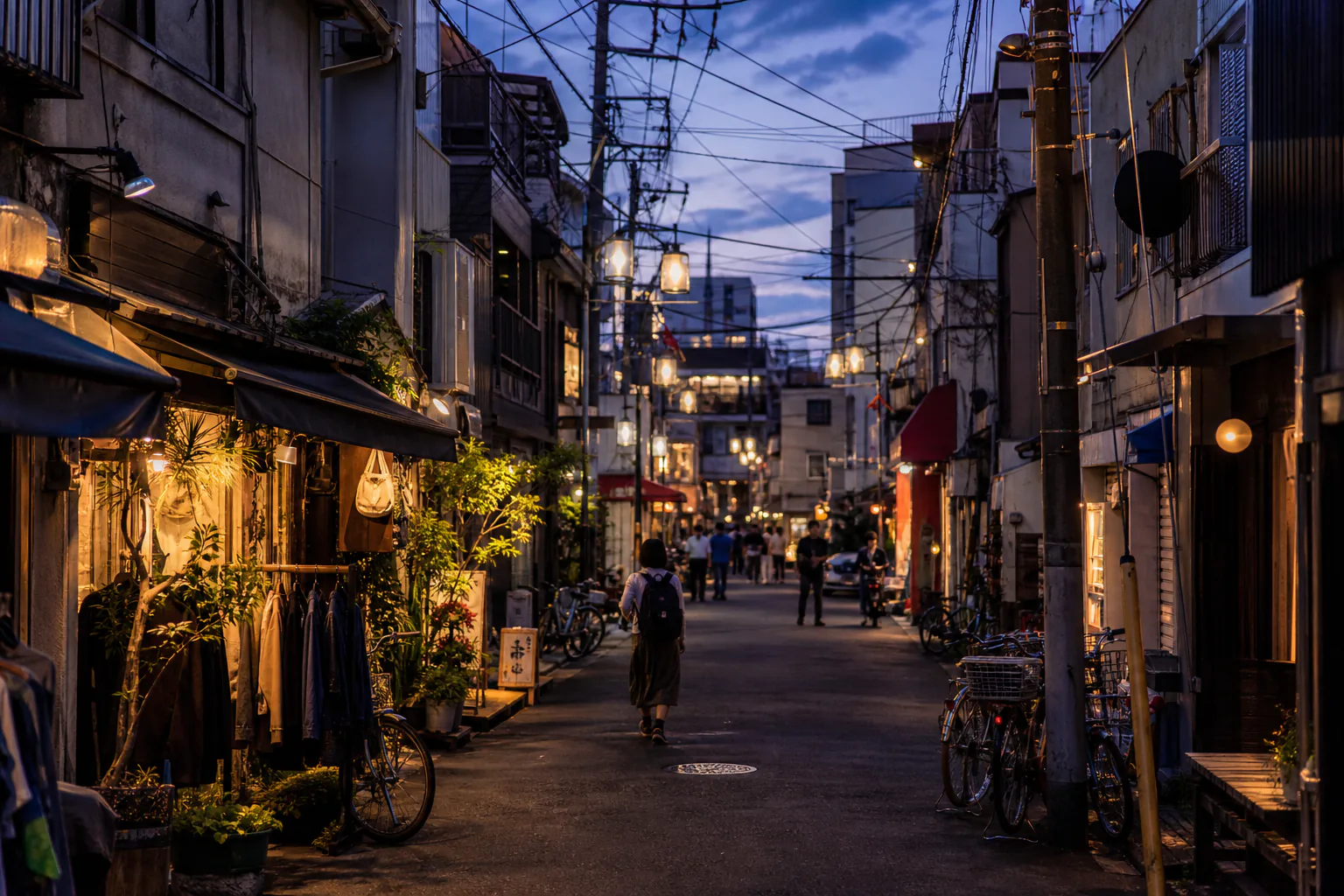
Koenji & Shimokitazawa
Tokyo's cheap, scruffy west: vintage shops, live music and rents you can live with.
Japan › Tokyo › Koenji & Shimokitazawa
Digimad score
8.5
Excellent
Best for Value + Music + Vintage
About
Koenji and Shimokitazawa are the counterweight to central Tokyo. Narrow streets of vintage clothing shops, tiny bars, live music venues and standing izakaya, with an older housing stock that costs 30-40% less than Shibuya. Both are 10-15 minutes from the centre on direct lines. They suit people who would rather spend their money on going out than on the postcode, and who do not need a modern building.
Koenji & Shimokitazawa at a glance
Internet
240 Mbps median fixed, excellent reliability
Monthly budget
$2,350/mo comfortable, $1,400 lean
Best months
Apr, May, Oct, Nov
Community
Medium nomad density, poor English
Key points
Rents 30-40% below Shibuya
Dense live music and small-bar culture
Direct trains to Shinjuku and Shibuya in 10-15 minutes
Strong local food at local prices
Suits you if
Scruffy, musical and cheerfully unpolished.
You want central Tokyo access at a third less rent
You like live music and small bars
You are comfortable in a Japanese-only environment
Cost of living
USD
Lean
$1,400/mo
Shared housing, local food
Comfortable
$2,350/mo
Private one-bed, coworking
Premium
$3,900/mo
Central, frequent dining
Local currency
JPY
Housing
- Studio
- $620
- 1-bed centre
- $900
- 1-bed outside
- $560
- Airbnb monthly
- $1,300
Everyday costs
- Local meal
- $7
- Mid-range meal
- $20
- Coffee
- $4
- Coworking day
- $18
- Hot desk/mo
- $180
The clearest way to make Tokyo affordable without leaving the centre behind.
Internet & connectivity
Fixed line
240 Mbps
Mobile
95 Mbps
Data plan
$25/mo
eSIM
Supported
Reliability
ExcellentPublic Wi-Fi
FairPower stability
ExcellentHome fibre is excellent but needs a residence card and weeks of lead time, so nomads use pocket Wi-Fi or eSIMs. Cafe Wi-Fi is less consistent than in Korea and some chains cap sessions at an hour.
Figures for Tokyo
Nomad community
Nomad density
MediumEnglish
PoorCoworking spaces
The Hive Jinnan
$250/mo
Shibuya
WeWork
$300/mo
Multiple wards
Mitsubishi Estate Inspired.Lab
$280/mo
Otemachi
Connecting The Dots
$190/mo
Shibuya
Languages spoken
Meeting people
The foreign community is large but fragmented across industries and wards. Startup events cluster in Shibuya and Otemachi; language exchanges are the easiest entry point for newcomers.
Making local friends takes real effort and some Japanese. The tech and startup scene is more accessible in English than most sectors.
Figures for Tokyo
Safety
Emergency 110 (police), 119 (fire and ambulance)
At night
ExcellentSolo female
ExcellentPetty crime
ExcellentCommon scams
Bar touts in Kabukicho and Roppongi leading to inflated tabs
Fake monks soliciting donations
Unexplained cover charges at izakaya
Women travellers
Among the safest cities in the world. Groping on packed rush-hour trains does occur, which is why women-only carriages exist.
LGBTQ+
Shinjuku Ni-chome is the largest scene in Asia. Socially tolerant, though same-sex marriage is not nationally recognised.
Crime is rare enough to be newsworthy. Earthquakes are the genuine hazard: enable government alerts and know your building's drill.
Figures for Tokyo
Healthcare
Consultation
$60
Pharmacies
ExcellentPublic system
National Health Insurance requires residency registration, which the nomad visa does not provide, so nomads pay full cost.
Private care
Quality is high and prices moderate for a developed country. The obstacle is language: relatively few clinics operate fully in English.
Insurance
The nomad visa requires private cover of JPY 10 million including death and repatriation. Arrange it before applying, since the certificate forms part of the application.
Figures for Tokyo
Getting around
Walkability
ExcellentPublic transport
ExcellentAirports
- HNDHaneda30 min
- NRTNarita70 min
The world's best urban rail network, with a Suica card covering trains, buses and convenience stores. Trains stop around midnight, which shapes nightlife: you either leave by 12 or stay until 5. Taxis are plentiful and expensive.
Figures for Tokyo
Climate & seasons
20°C / 12°C
Humid subtropical
Rainy season
Tsuyu from June to mid-July, typhoon season August to October
Air quality
Good. Spring cedar pollen affects a surprising number of people for the first time.
Cherry blossom in early April and autumn foliage in November are worth planning around. August is hot, humid and draining.
Figures for Tokyo
All ratings
Watch out for
Very little English spoken
Older buildings, often without lifts or good insulation
Limited coworking; expect to commute or work from home