
Kyoto
Temple gardens, university neighbourhoods and focused work behind the tourist crowds.
Japan › Kyoto
Digimad score
8.5
Excellent
Best for Culture + Quiet + Walkable
About
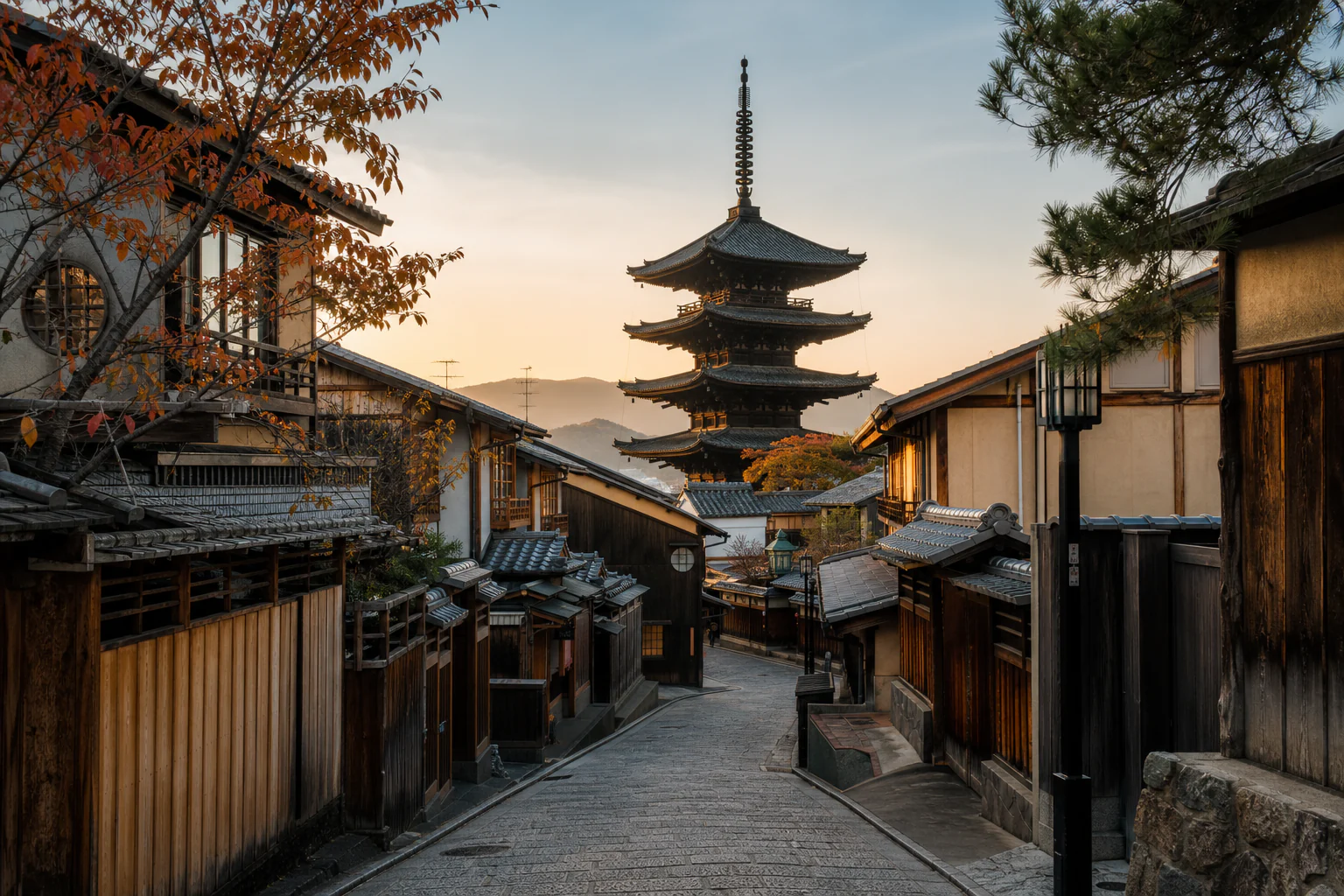
Kyoto rewards people who can separate the lived-in city from the destination visited by millions each year. Beyond the packed lanes of Gion and the famous temples, it is a serious university town with quiet residential streets, excellent cafes, riverside cycling and a deep craft and arts culture. Internet and transit are dependable, Osaka is close enough for business or nightlife, and the surrounding mountains make nature part of an ordinary week. The friction is tourism: central buses overflow, short-term housing is expensive and the most photogenic districts can feel unusable by midday. Kyoto's basin also produces cold winters and brutally humid summers. It is strongest for writers, researchers and independent workers who want beauty and routine, choose a residential neighbourhood and explore the headline sights early or late.
Kyoto at a glance
Internet
215 Mbps median fixed, excellent reliability
Monthly budget
$2,150/mo comfortable, $1,250 lean
Best months
Apr, May, Oct, Nov
Community
Low nomad density, fair English
Key points
Extraordinary temples, gardens, crafts and seasonal landscapes woven into daily life
A large university population supports independent cafes and cultural events
The Kamo River, eastern hills and northern trails make nature easy to reach
Osaka is around half an hour away by frequent rail
Flat central districts are excellent for cycling and walking
Neighbourhoods
Nakagyo around Karasuma Oike is the balanced central base: walkable to downtown, well connected and quieter than the shopping streets. Shimogyo near Kyoto Station is practical for regional travel and newer apartments, though less atmospheric. Sakyo, especially Demachiyanagi and the streets near Kyoto University, offers cafes, the Kamo River, intellectual energy and quick access to the eastern hills. Kamigyo and Nishijin have traditional townhouses, craft workshops and lower-key local life, with slower transit. Higashiyama and Gion are beautiful but crowded, expensive and constrained by heritage housing. Arashiyama is serene outside visitor hours but remote from everyday central life. Residential Kyoto begins a few blocks away from almost every landmark, so prioritise a station and supermarket over a postcard address.
Cost of living
USD
Lean
$1,250/mo
Shared housing, local food
Comfortable
$2,150/mo
Private one-bed, coworking
Premium
$3,750/mo
Central, frequent dining
Local currency
JPY
Housing
- Studio
- $560
- 1-bed centre
- $880
- 1-bed outside
- $540
- Coliving room
- $580
- Airbnb monthly
- $1,300
Everyday costs
- Local meal
- $7
- Mid-range meal
- $22
- Coffee
- $4
- Groceries/mo
- $350
- Coworking day
- $16
- Hot desk/mo
- $170
- Private desk/mo
- $330
- Transit pass
- $55
- Short ride
- $11
- Scooter/mo
- $0
- Gym/mo
- $55
Ordinary neighbourhood life is not dramatically more expensive than Osaka, but tourism inflates central restaurants and furnished accommodation. Local leases are reasonable; the deposits, guarantor requirements and furniture make them difficult for a stay of only months.
Internet & connectivity
Fixed line
215 Mbps
Mobile
82 Mbps
Data plan
$25/mo
eSIM
Supported
Reliability
ExcellentPublic Wi-Fi
FairPower stability
ExcellentModern apartments and coworking spaces have excellent connections. Traditional machiya can have weak internal Wi-Fi or no easy fibre installation, so test the actual workspace. Short-stayers generally use included Wi-Fi, pocket Wi-Fi or an eSIM.
Nomad community
Nomad density
LowEnglish
FairCoworking spaces
QUESTION
$175/mo
Kawaramachi
Impact Hub Kyoto
$155/mo
Nishijin
Oinai Karasuma
$145/mo
Karasuma
Languages spoken
Meeting people
Universities, arts organisations, language exchanges and traditional-craft communities provide more durable connections than formal nomad groups. Many events are bilingual, but Japanese opens the deeper layer.
The international population includes researchers, artists and long-term residents rather than a large transient nomad scene. Kyoto suits people comfortable building relationships slowly.
Safety
Emergency 110 (police), 119 (fire and ambulance)
At night
ExcellentSolo female
ExcellentPetty crime
ExcellentCommon scams
Tourist menus and experiences priced far above local equivalents
Unlisted cover or seating charges in nightlife venues
Women travellers
Exceptionally safe, including walking or cycling alone in central residential areas after dark.
LGBTQ+
Socially discreet but generally tolerant, with a small community and more options available in nearby Osaka. Japan lacks national marriage equality.
Crime is extremely rare. Cycling conflicts on narrow streets, summer heat, earthquakes and mountain conditions are more practical concerns than personal security.
Healthcare
Consultation
$50
Pharmacies
ExcellentPublic system
National Health Insurance requires residency registration, unavailable under Japan's short digital nomad status.
Private care
Kyoto's university hospitals provide excellent advanced care. Routine clinics are affordable but English availability varies, so interpretation may be needed outside international services.
Insurance
Without resident insurance you pay full cost. Carry the private cover required for Japan's visa, including repatriation, and identify an English-support clinic before you need one.
Getting around
Walkability
ExcellentPublic transport
GoodAirports
- ITMOsaka Itami60 min
- KIXKansai International90 min
Two subway lines and several private railways work well, while buses fill the gaps but suffer badly from tourist congestion. Cycling is often the fastest way across the flat centre. Shinkansen and regional trains make Osaka, Kobe, Nara and Tokyo straightforward.
Climate & seasons
21°C / 11°C
Humid subtropical basin climate
Rainy season
Tsuyu runs from June into July, with typhoon risk from August to September
Air quality
Generally very good. Spring pollen is intense, and still summer air in the basin can feel heavy even when measured pollution is low.
The surrounding mountains amplify both seasons: winters are colder than Osaka and summers are famously hot and humid. Spring blossoms and autumn colour also bring the largest visitor crowds.
All ratings
Watch out for
Overtourism overwhelms famous districts, buses and short-term accommodation
Summer in the basin is oppressively hot and humid
Furnished monthly rentals command a large premium over local leases
Nightlife and international business networks are much smaller than Osaka's