
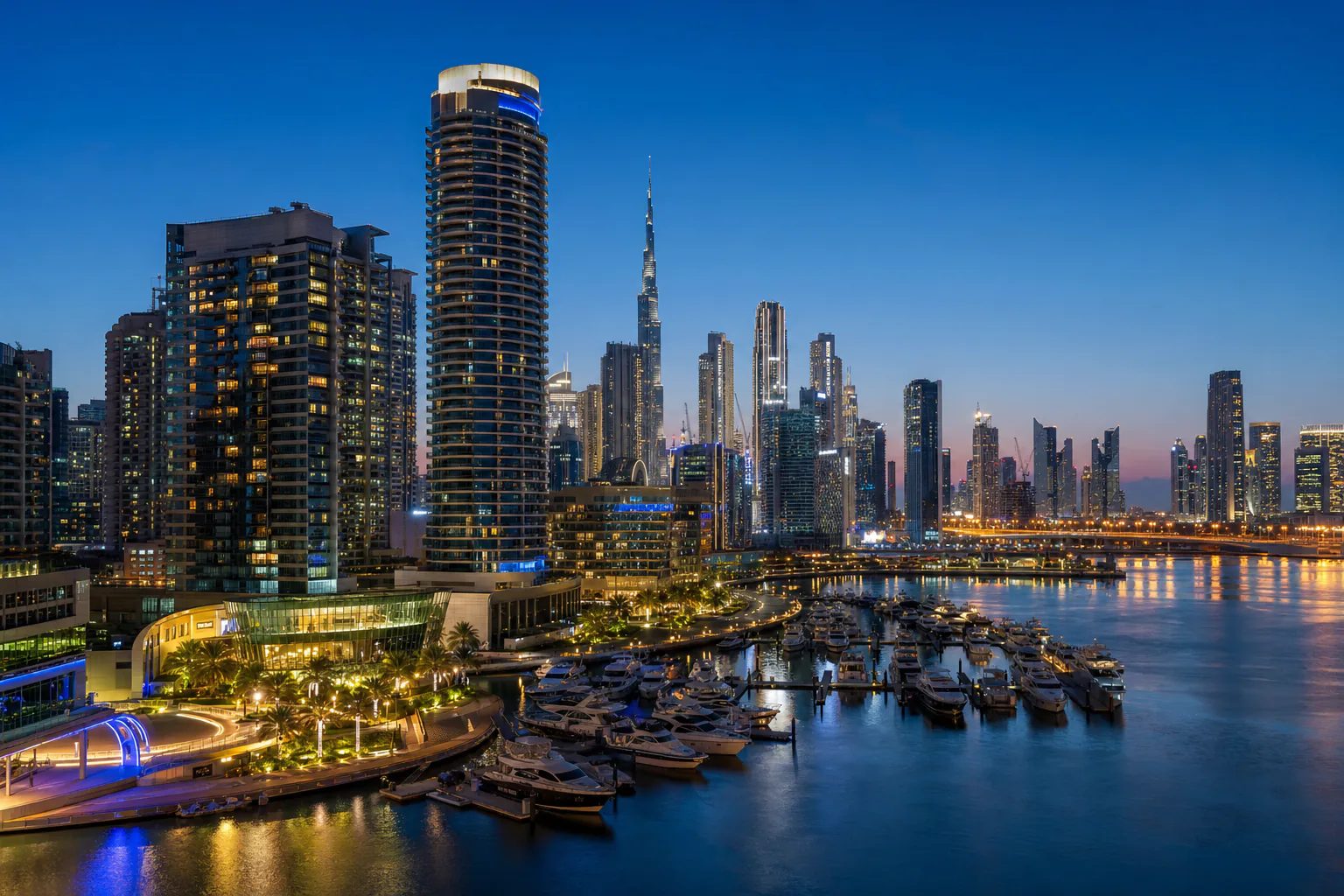
United Arab Emirates
Zero income tax, first-world infrastructure, and a one-year remote work visa to make it legal.
United Arab Emirates
Digimad score
8.4
Very good
Best for Zero tax + Infrastructure + Safety
About
The UAE is the only place on the standard nomad circuit where the tax position is the headline rather than the footnote: no personal income tax, a formal remote-work residence visa, and a tax-residency certificate available to people who actually live there. Dubai delivers infrastructure that rivals Singapore, the fastest consumer internet in the world, a driverless metro, and flights to everywhere within eight hours. The cost is real: rent is European, alcohol is expensive, summer from June to September is genuinely unliveable outdoors, and the social contract is different from what Western nomads are used to, with speech, drug and public-conduct laws enforced far more strictly than the glossy image suggests. It suits high earners optimising their structure more than it suits USD 1,500-a-month lifestyle arbitrage.
United Arab Emirates at a glance
Internet
320 Mbps median fixed, excellent reliability
Monthly budget
$3,800/mo comfortable, $2,200 lean
Best months
Nov, Dec, Jan, Feb
Community
High nomad density, excellent English
Key points
No personal income tax, and a tax-residency certificate is obtainable after 183 days
The Virtual Work Residence Visa gives a year of legal residence for USD 3,500 a month of income
Among the fastest mobile and fixed internet speeds measured anywhere
Extremely low crime, with women reporting some of the highest safety scores globally
Emirates and flydubai connect Dubai to almost every major city within eight hours
Essentials
Capital
Abu Dhabi
Currency
AED
Languages
Arabic
Visa paths
3
Visa options
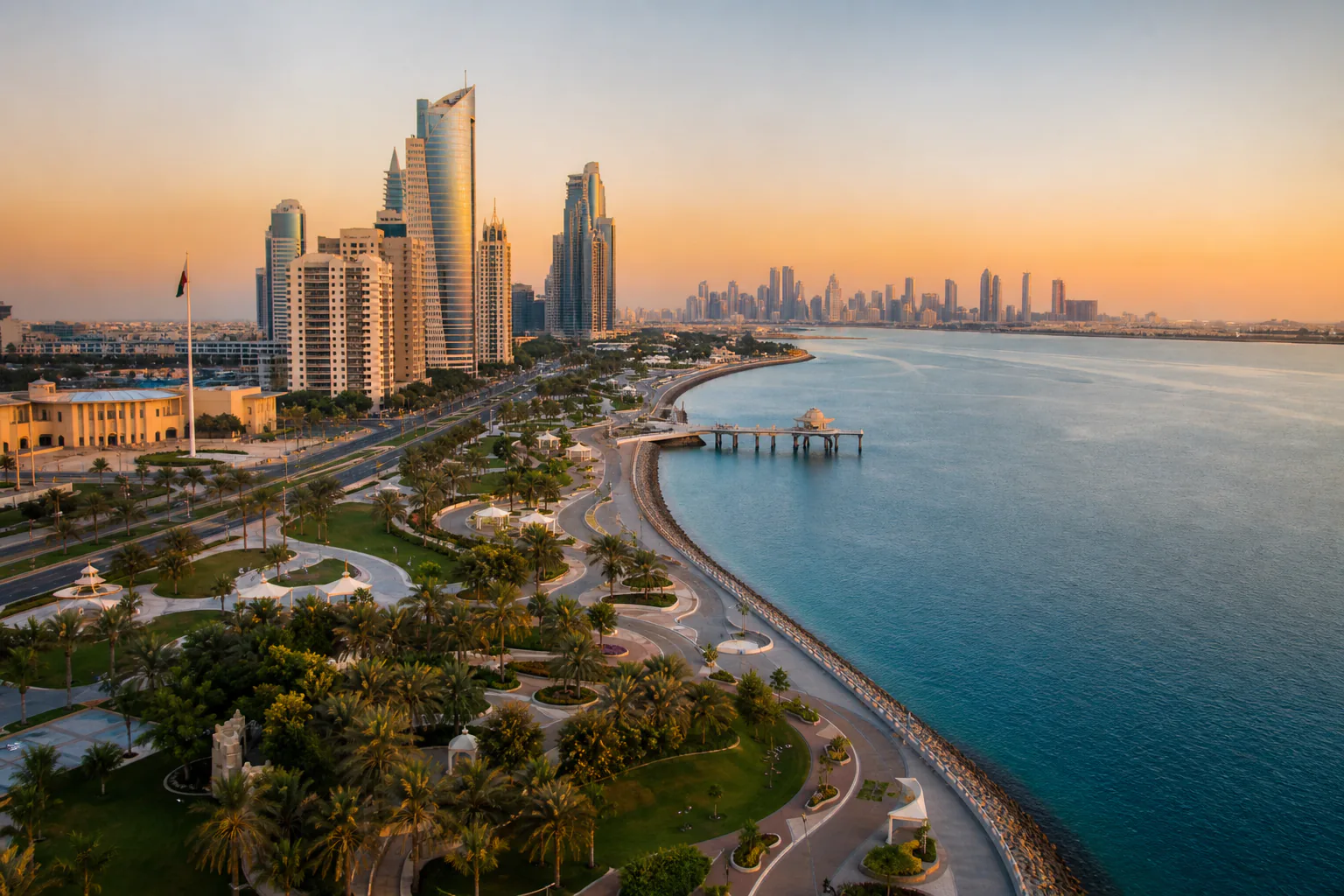
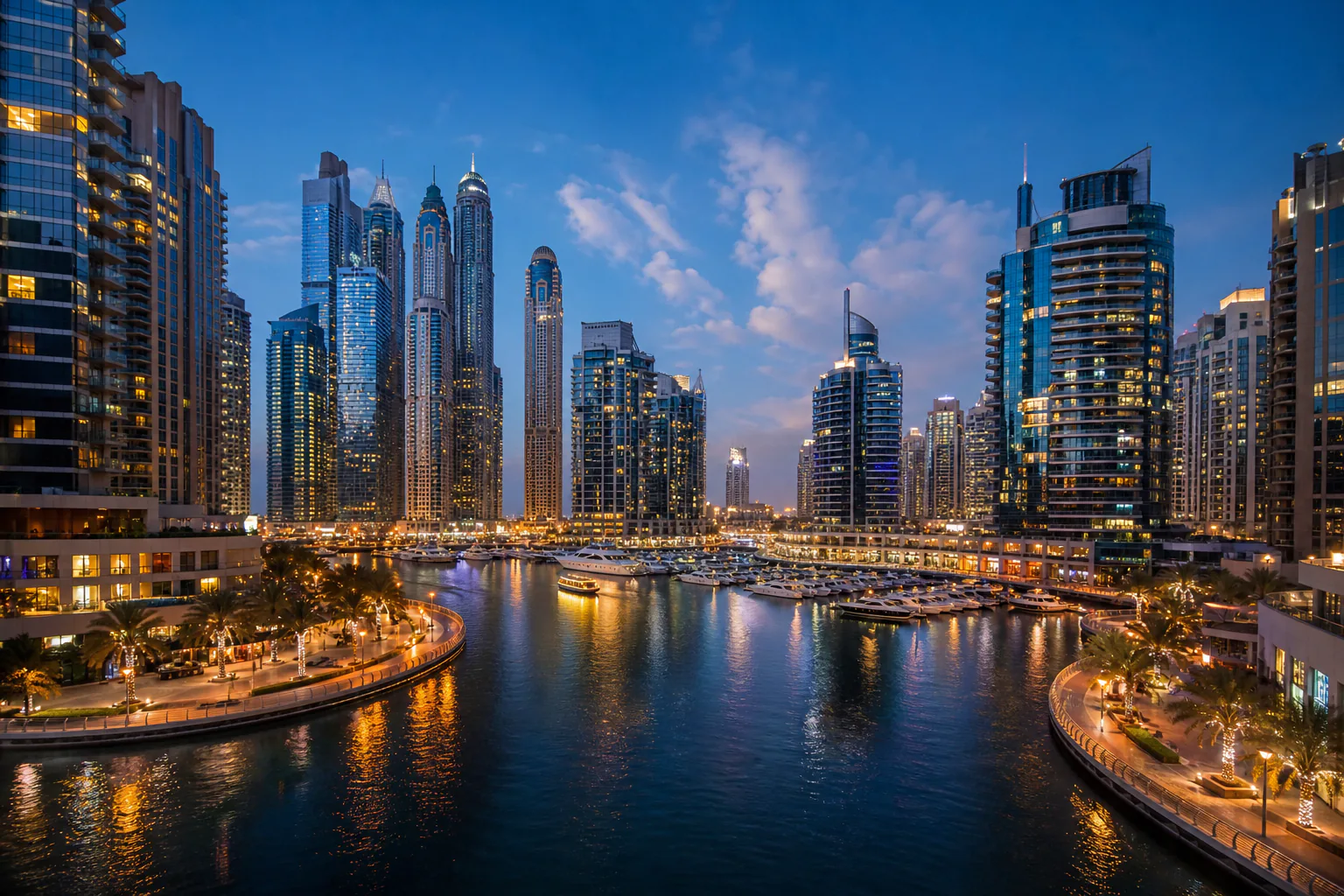
Cities in United Arab Emirates
Cost of living
USD
Lean
$2,200/mo
Shared housing, local food
Comfortable
$3,800/mo
Private one-bed, coworking
Premium
$7,000/mo
Central, frequent dining
Local currency
AED
Housing
- Studio
- $1,200
- 1-bed centre
- $1,900
- 1-bed outside
- $1,100
- Coliving room
- $900
- Airbnb monthly
- $2,200
Everyday costs
- Local meal
- $6
- Mid-range meal
- $30
- Coffee
- $6
- Groceries/mo
- $500
- Coworking day
- $30
- Hot desk/mo
- $320
- Private desk/mo
- $600
- Transit pass
- $90
- Short ride
- $8
- Scooter/mo
- $0
- Gym/mo
- $90
Rent dominates everything and is typically quoted annually, with landlords preferring one to four post-dated cheques. Budget for a 5% agency fee and a refundable deposit. Groceries and alcohol are expensive; South Asian and Filipino cafeterias keep daily food costs manageable if you avoid the brunch circuit.
Internet & connectivity
Fixed line
320 Mbps
Mobile
260 Mbps
Data plan
$45/mo
eSIM
Supported
Reliability
ExcellentPublic Wi-Fi
ExcellentPower stability
ExcellentConsistently among the fastest mobile networks in the world. The catch is price: home fibre runs AED 350-500 a month and mobile plans are expensive by regional standards. VoIP over WhatsApp and FaceTime audio works, but some voice and video calling services remain restricted, so many residents use a VPN as a matter of routine.
Nomad community
Nomad density
HighEnglish
ExcellentCoworking spaces
AstroLabs
$400/mo
Dubai, JLT
Tech-focused, includes company setup support
Nook
$300/mo
Dubai, Al Serkal
Letswork
$130/mo
UAE-wide, hotel and cafe network
Pay-as-you-go access across many venues
WeWork Hub71
$380/mo
Abu Dhabi
Languages spoken
Meeting people
The community skews toward founders, crypto, e-commerce and finance rather than backpacking nomads. Networking is transactional and effective; events are frequent and well-attended between October and April.
Around 88% of the population is foreign-born, so being an outsider is the norm rather than the exception.
Safety
Emergency 999 (police), 998 (ambulance)
At night
ExcellentSolo female
ExcellentPetty crime
ExcellentCommon scams
Unlicensed property agents taking deposits for listings they do not control
Taxi drivers taking longer routes from the airport
Fake charity collectors during Ramadan
Rental car companies inventing damage on return
Women travellers
Among the safest countries in the world for solo female travellers, including at night. Dress codes are relaxed in Dubai but modest cover is expected in malls, government buildings and Sharjah.
LGBTQ+
Same-sex relations are criminalised under federal law. There is a discreet expat scene, but there are no legal protections and public displays of affection carry real risk. Travellers should weigh this seriously.
Street crime is close to non-existent. The genuine risks here are legal rather than criminal: drug possession, public intoxication, defamation on social media, and unpaid debt all carry consequences that surprise Western residents.
Healthcare
Consultation
$110
Pharmacies
ExcellentPublic system
Public facilities are strong but prioritise Emirati citizens. Residents are legally required to hold health insurance, and in Dubai and Abu Dhabi employers must provide it.
Private care
Private healthcare is excellent, with internationally trained specialists and no waiting lists. Prices are correspondingly high: a specialist consultation without insurance runs USD 80-150.
Insurance
Health insurance is mandatory for residents and required for the remote-work visa. Do not plan to self-fund: out-of-pocket prices here are closer to the United States than to Asia. Note that some medications legal at home, including codeine and CBD, are controlled substances requiring prior approval.
Getting around
Walkability
PoorPublic transport
GoodAirports
- DXBDubai International20 min
- DWCAl Maktoum (Dubai World Central)50 min
- AUHZayed International (Abu Dhabi)40 min
- SHJSharjah International30 min
The Dubai Metro is clean, driverless and cheap, but it serves a single spine and most destinations still need a taxi at the end. The city is built for cars: crossing a six-lane road on foot is often impossible, and walking outdoors is unpleasant for half the year.
Climate & seasons
41°C / 20°C
Hot desert
Rainy season
Minimal rainfall, mostly brief winter storms between December and March
Air quality
Dust and sand keep particulate levels elevated year-round, with shamal wind events causing sharp spikes.
Winter is close to perfect: 25C, sunny, dry, and the entire city moves outdoors. Summer is the opposite, with humidity in Dubai pushing the heat index past 50C and life confined to air conditioning.
All ratings
Getting in
Most EU, UK and Oceanian passports receive 90 days visa-free within a 180-day period; US and several others receive 30 days, extendable twice. Entry is by facial recognition at Dubai and Abu Dhabi with no stamp, so track your own days. Prescription medication rules are strict, and controlled substances need prior Ministry of Health approval.
Visa run options
Oman and Qatar are short flights and reset visa-free entry
The 30-day tourist entry can usually be extended twice in-country for AED 600 each
The Virtual Work Residence Visa removes the need for runs entirely
Tax
Residency threshold
183 days
in any rolling 365 days
Income tax
0% on personal income
Territorial system
Yes
Foreign income
The UAE levies no personal income tax on salary, foreign earnings, dividends or capital gains. A federal corporate tax of 9% applies to business profits above AED 375,000, which can catch freelancers and consultants operating through a licence, and there is 5% VAT.
For nomads
The reason people structure here is the Tax Residency Certificate, available to residents who spend 183 days in the country in a twelve-month period, or 90 days in some circumstances with a permanent home and qualifying ties. That certificate is what makes the zero-tax position defensible to your former country of residence. Simply holding a visa without physical presence does not achieve this.
Social security
The UAE pension scheme applies to Emirati and GCC nationals only. Expatriate employees receive end-of-service gratuity instead.
Informational only, not tax advice. Leaving your previous tax residence cleanly is the hard part, and it depends on that country's rules rather than the UAE's. Take professional advice on both sides.
Practicalities
Timezone
Asia/Dubai
Drives on
Right
Voltage
230V / 50Hz
Plug types
Payments
Almost entirely cashless. Cards and Apple Pay work everywhere, including taxis and small shops.
Tipping
10-15% is customary in restaurants unless a service charge is included, and small tips for valets and delivery drivers are normal.
Banking
A local bank account requires an Emirates ID, which requires residency. Once you have residency, banking is efficient. Note that debt is criminalised: never issue a cheque you cannot cover.
Alcohol
Legal for non-Muslims in licensed venues and shops. Expensive, taxed, and public intoxication is an offence. Residents no longer need a personal liquor licence in Dubai, but rules differ by emirate and Sharjah is entirely dry.
Local customs
Ramadan changes daily rhythm significantly, with eating and drinking in public prohibited during daylight. Public displays of affection, swearing and rude gestures are punishable offences, and criticising the government or posting defamatory content online carries real legal risk.
Watch out for
Rent is the dominant cost and is usually demanded in one to four cheques a year, often up front
June to September is 40-48C with humidity; outdoor life effectively stops
Same-sex relationships are criminalised, and there is no legal protection for LGBTQ residents
Drug laws are severe, including for trace amounts and substances legal elsewhere such as CBD
Debt is criminalised: a bounced cheque or unpaid loan can result in a travel ban
Sources
publishedLast reviewed 2026-07-27