

Philippines
English everywhere, world-class islands, and tourist extensions that stretch to three years.
Philippines
Digimad score
7.5
Very good
Best for English + Islands + Diving
About
The Philippines is the easiest country in Asia to arrive in and simply start living. English is an official language used in business, medicine and government, so nothing needs translating. Tourist stays can be extended repeatedly up to 36 months without leaving, which no other country in the region allows. The islands are genuinely world-class, and the cost of living outside Manila is among the lowest anywhere with reasonable infrastructure. The catch is infrastructure itself: internet is the weakest of any country on this list, typhoons cross the archipelago every year, Manila traffic is legendarily bad, and healthcare outside the big cities is thin. It rewards people who pick a location with fibre, keep a backup connection, and plan around the June-to-November storm season.
Philippines at a glance
Internet
95 Mbps median fixed, fair reliability
Monthly budget
$1,450/mo comfortable, $800 lean
Best months
Jan, Feb, Mar, Apr
Community
Medium nomad density, excellent English
Key points
English is an official language and used everywhere, removing all daily friction
Tourist stays extend in-country to 36 months for visa-free nationals, uniquely generous
Cost of living outside Manila is among the lowest in Asia with usable infrastructure
Resident aliens are generally taxed only on Philippine-sourced income
Diving, surfing and island access are world-class and cheap
Essentials
Capital
Manila
Currency
PHP
Languages
Filipino, English
Visa paths
3
Visa options
Cities in Philippines
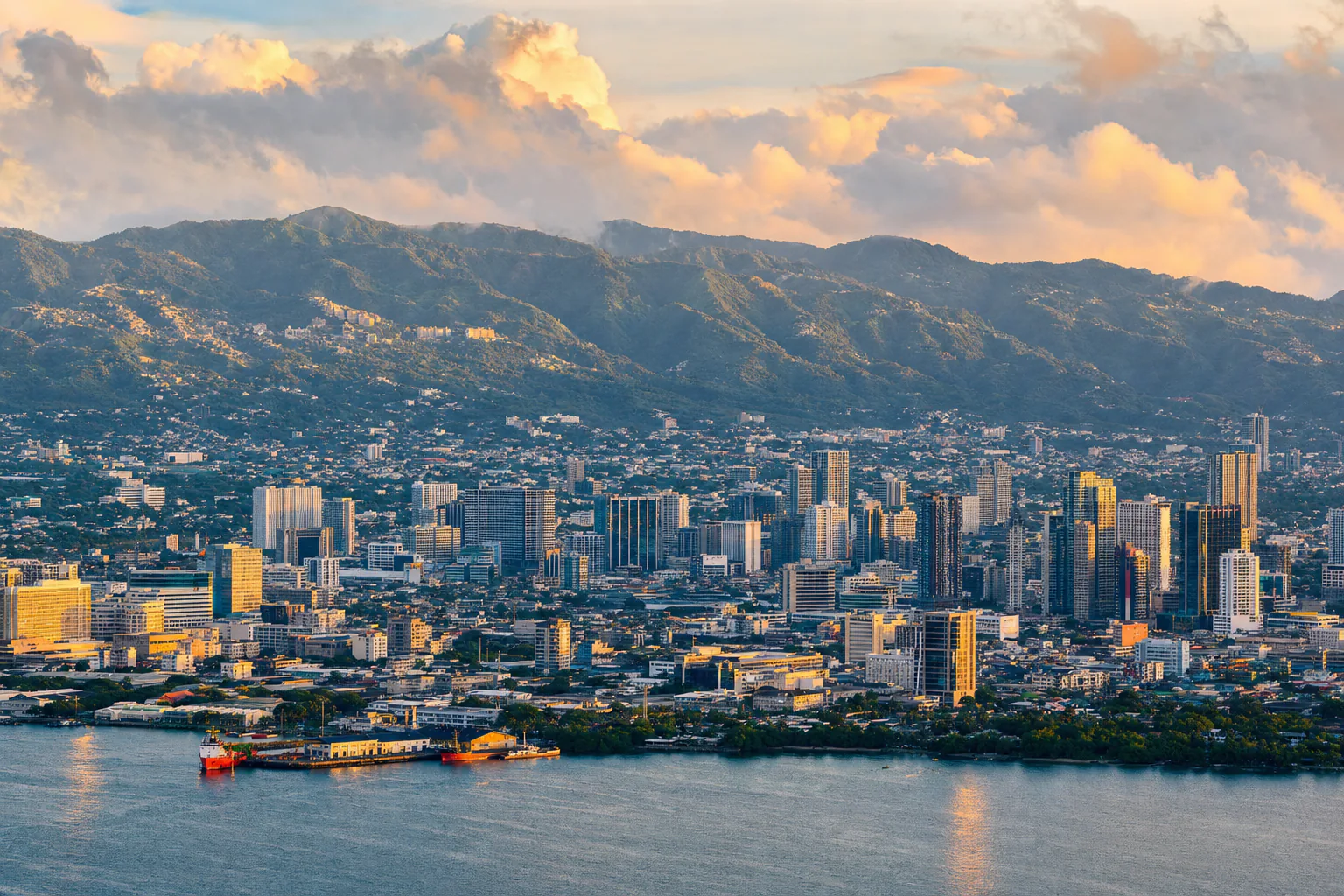 Cebu City★ 7.9The Philippines' most workable city: real infrastructure, islands 90 minutes away.
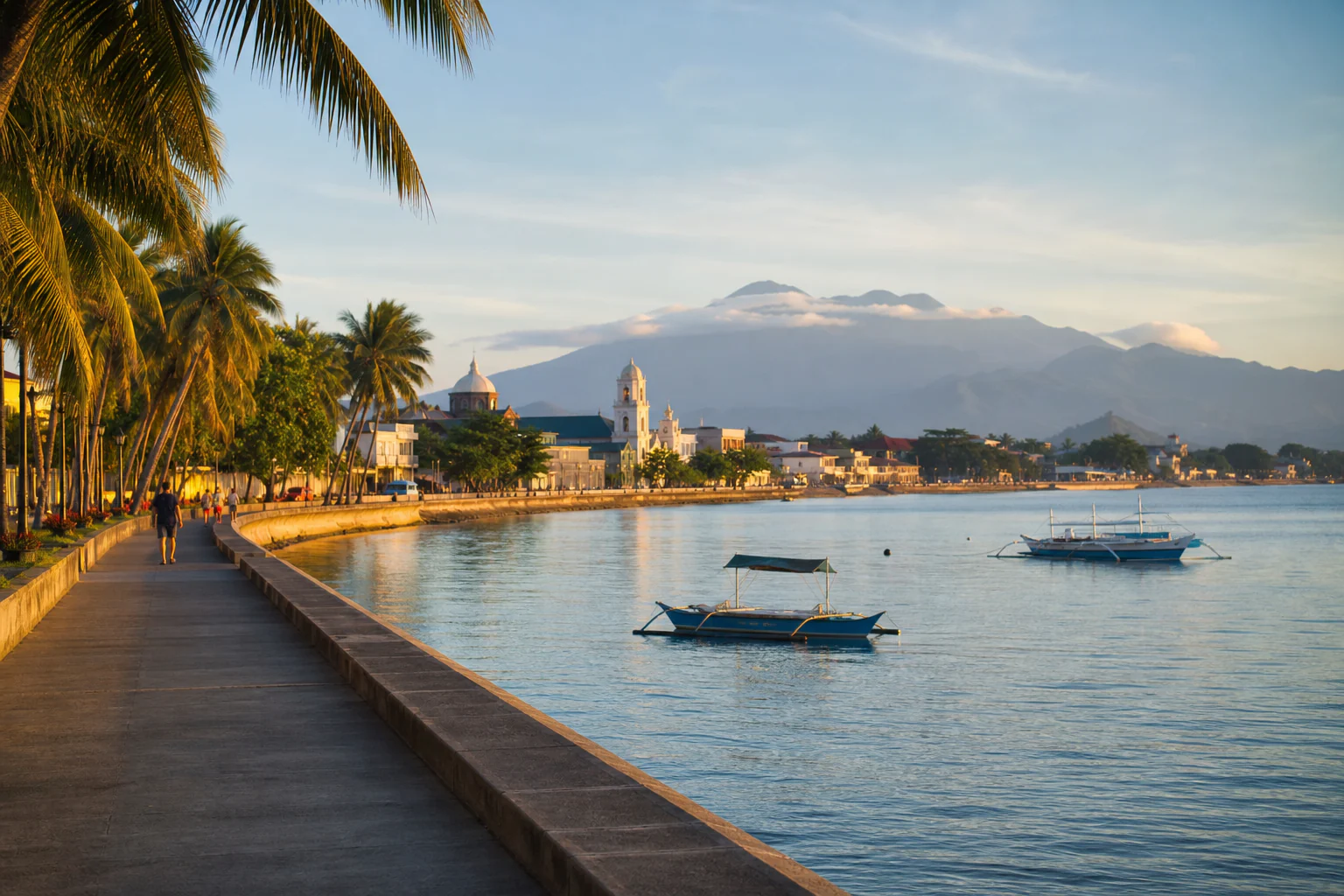 Dumaguete★ 7.8A low-cost university town with a walkable waterfront and exceptional diving nearby.
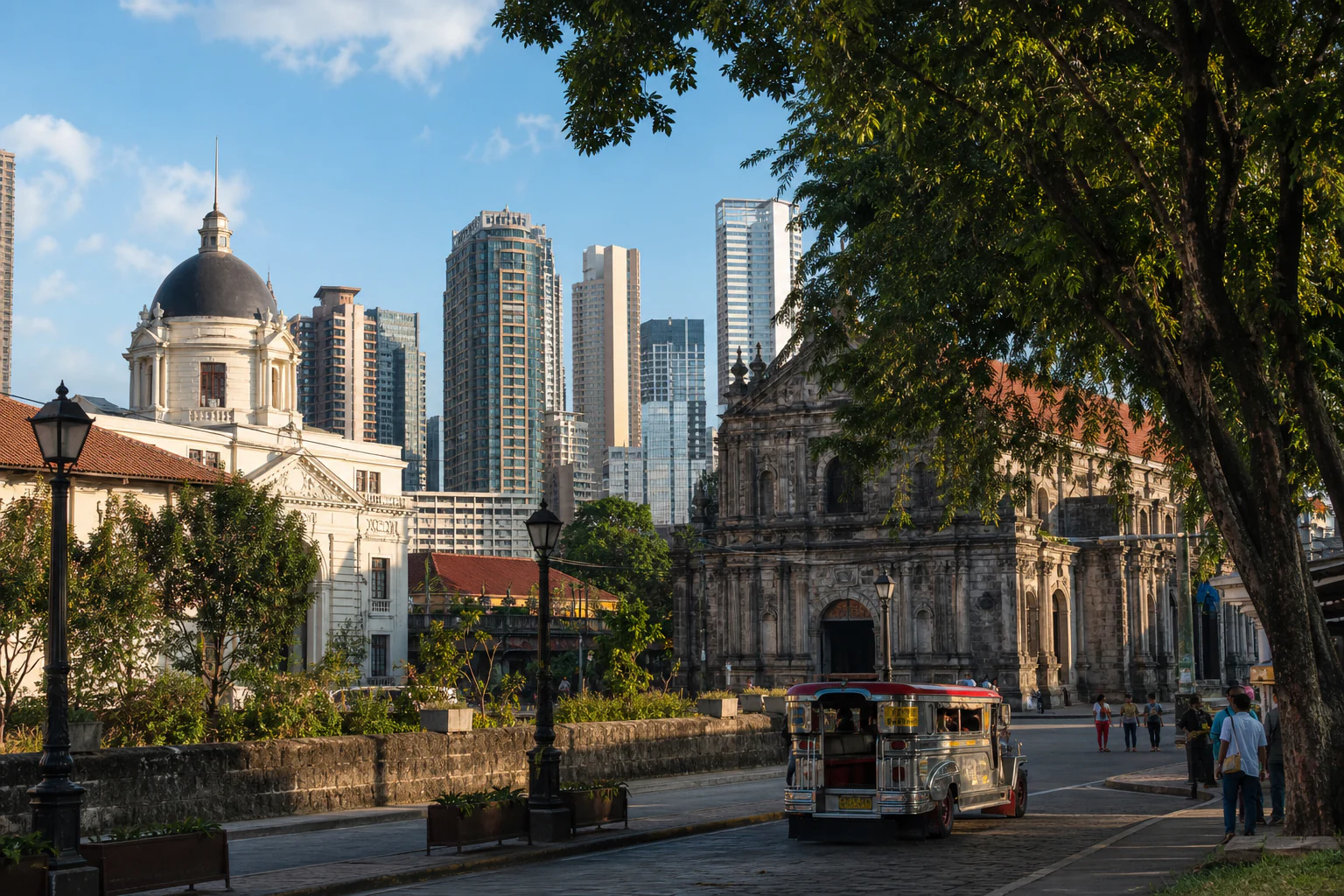 Manila★ 7.6The Philippines' economic engine: English-first, energetic and exhausting in equal measure.
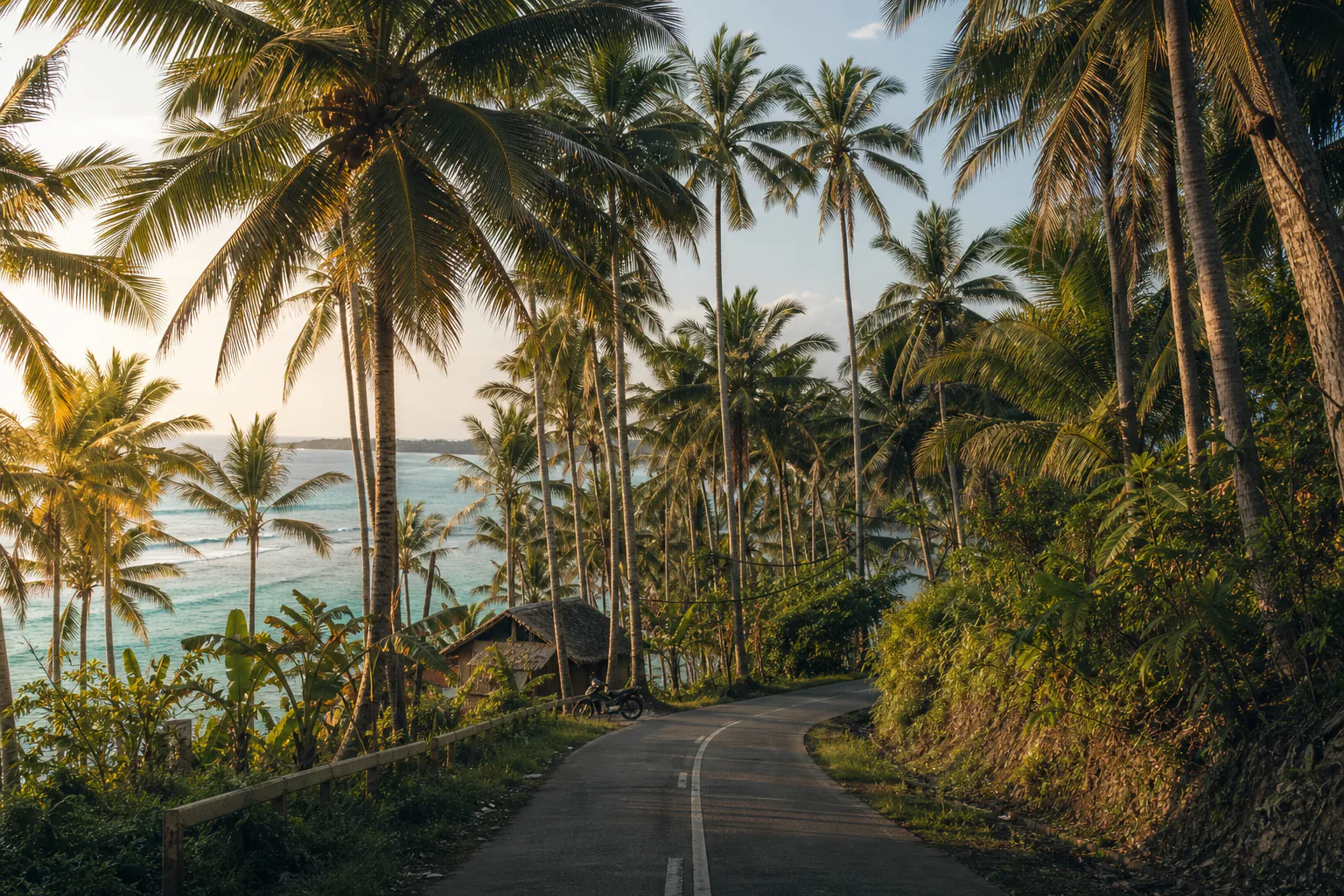 Siargao★ 7.6A surf island with a real nomad scene and internet that will occasionally ruin your day.
Cost of living
USD
Lean
$800/mo
Shared housing, local food
Comfortable
$1,450/mo
Private one-bed, coworking
Premium
$2,700/mo
Central, frequent dining
Local currency
PHP
Housing
- Studio
- $320
- 1-bed centre
- $520
- 1-bed outside
- $300
- Coliving room
- $380
- Airbnb monthly
- $700
Everyday costs
- Local meal
- $3
- Mid-range meal
- $12
- Coffee
- $3
- Groceries/mo
- $250
- Coworking day
- $8
- Hot desk/mo
- $110
- Private desk/mo
- $200
- Transit pass
- $25
- Short ride
- $3
- Scooter/mo
- $70
- Gym/mo
- $40
Manila's BGC and Makati are priced like a mid-tier Asian capital; everywhere else is dramatically cheaper. Island living can be deceptive: rent is low but imported groceries, reliable internet and flights add up.
Internet & connectivity
Fixed line
95 Mbps
Mobile
30 Mbps
Data plan
$12/mo
eSIM
Supported
Reliability
FairPublic Wi-Fi
PoorPower stability
FairFibre from Converge, PLDT and Globe is genuinely good where it exists, mostly in Metro Manila, Cebu and larger towns. Outside those, connections drop to shared 4G and brownouts are routine. Starlink is legal and increasingly common among nomads on the islands, and many people run a mobile hotspot as a permanent backup.
Nomad community
Nomad density
MediumEnglish
ExcellentCoworking spaces
The Company
$120/mo
Cebu & Manila
Acceler8
$150/mo
Manila, BGC & Makati
Kickstart / iiOffice
$110/mo
Cebu IT Park
Siargao coworking spaces
$130/mo
General Luna, Siargao
Languages spoken
Meeting people
Cebu has a real outsourcing and startup economy that produces a mixed local-and-foreign professional scene. Siargao's community is surf-first and seasonal. Manila's foreign population is largely corporate rather than nomadic.
Because everyone speaks English, integration with locals is far easier than anywhere else in Asia, which changes the texture of a long stay considerably.
Safety
Emergency 911
At night
FairSolo female
FairPetty crime
FairCommon scams
Taxi drivers refusing the meter, especially at airports
ATM skimming at standalone machines
Budol-budol confidence scams targeting foreigners
Inflated 'tourist' pricing on boat transfers and tours
Women travellers
Generally manageable with normal precautions, though street harassment is more common than in Japan, Korea or Vietnam. Grab rather than street taxis at night is the standard advice.
LGBTQ+
Socially visible and broadly tolerated, with a large and open community, though there is no same-sex marriage or comprehensive anti-discrimination law.
Petty theft and scams are the realistic concerns. Certain areas of Mindanao carry standing government travel advisories; check yours before booking anything in the far south.
Healthcare
Consultation
$25
Pharmacies
GoodPublic system
Public hospitals are under-resourced and not a realistic option for foreigners beyond emergencies.
Private care
Private hospitals in Manila and Cebu are good, with English-speaking, often US-trained doctors and low prices. Outside those cities, facilities are basic and serious cases are flown to Manila or Singapore.
Insurance
Medical evacuation cover matters more here than almost anywhere, because island healthcare is thin and the nearest capable hospital is often a flight away. Confirm motorbike riding is covered.
Getting around
Walkability
PoorPublic transport
PoorAirports
- MNLNinoy Aquino International (Manila)40 min
- CEBMactan-Cebu International40 min
- IAOSiargao (Sayak)45 min
- CRKClark International90 min
Domestic flights with Cebu Pacific and Philippine Airlines are the only practical way between islands, and cancellations in storm season are common. In cities, Grab is reliable but surge pricing in Manila rush hour is severe. Angkas motorbike taxis are much faster in traffic.
Climate & seasons
32°C / 24°C
Tropical maritime
Rainy season
June to November, overlapping with typhoon season; the eastern seaboard is hit hardest
Air quality
Manila has significant traffic pollution. The islands are clean.
The dry season from January to April is close to perfect. Around 20 typhoons enter Philippine waters each year, and travel disruption during the peak months should be planned for rather than hoped against.
All ratings
Getting in
Most Western passports enter visa-free for 30 days and can extend repeatedly at any Bureau of Immigration office, up to 36 months in total without leaving. All arrivals must file the eTravel declaration within 72 hours before arrival. An ACR I-Card is required once your total stay exceeds 59 days.
Visa run options
In-country extensions make border runs unnecessary for up to three years
Hong Kong, Taipei, Singapore and Kuala Lumpur are all short flights from Manila or Cebu
After 36 months you must exit, but can usually return and start a fresh cycle
Tax
Residency threshold
180 days
per calendar year
Income tax
0-35% progressive on Philippine-sourced income
Territorial system
Yes
Foreign income
Resident aliens and non-resident aliens are taxed only on income sourced within the Philippines. Worldwide taxation applies to Philippine citizens who are residents, not to foreign nationals. That makes the Philippines one of the more benign long-stay destinations for foreign-earned income.
For nomads
Staying beyond 180 days in a calendar year can make you a resident alien for tax purposes and may create registration obligations, but foreign-sourced income generally remains outside the Philippine tax net. Confirm the position if you also invoice Philippine clients.
Social security
SSS and PhilHealth apply to local employment. Foreign nationals on tourist extensions are outside both.
Informational only, not tax advice. The source rules for services performed physically in the Philippines are worth checking with a local accountant.
Practicalities
Timezone
Asia/Manila
Drives on
Right
Voltage
220V / 60Hz
Plug types
Payments
Cash-heavy outside malls and chains. GCash and Maya e-wallets are near-universal for locals and worth setting up. Card acceptance is patchy on the islands.
Tipping
Appreciated and increasingly expected in tourist-facing service; 10% is generous. Many restaurants add a service charge.
Banking
Local accounts require an ACR I-Card or long-stay visa. GCash can be opened by foreigners with a local number and passport, which solves most daily payment needs.
Alcohol
Cheap and widely available. Some municipalities apply liquor curfews.
Local customs
Warm, informal and highly relational. Family ties structure most decisions, Catholicism shapes public life, and indirect communication is preferred over blunt disagreement.
Watch out for
Internet is the weakest of any major nomad destination; always verify the connection before committing
Typhoon season from June to November regularly disrupts travel and power
Manila traffic is among the worst in the world; a 10 km trip can take 90 minutes
Healthcare outside Manila and Cebu is limited, and serious cases mean a domestic flight
Petty crime and scams are more common than in Thailand or Vietnam
Sources
publishedLast reviewed 2026-07-27