

Indonesia
Bali runs the region's biggest nomad scene; the rest of the country is barely explored.
Indonesia
Digimad score
8.2
Very good
Best for Community + Surf + Nature
About
For most remote workers Indonesia means Bali, and Bali has become the single densest concentration of location-independent workers on earth. That brings real infrastructure, coworking that would not look out of place in Lisbon, and a social scene you cannot avoid even if you try. It also brings traffic that has outgrown the roads, a rental market priced in dollars, and a visa situation that improved substantially with the 2024 E33G remote-worker KITAS but still trips people up. Away from Bali, Jakarta is a serious business city that almost no nomads consider, and Yogyakarta and Lombok offer a fraction of the cost with a fraction of the community. Internet is good where it matters and unreliable where it does not.
Indonesia at a glance
Internet
90 Mbps median fixed, good reliability
Monthly budget
$1,800/mo comfortable, $900 lean
Best months
May, Jun, Jul, Aug
Community
Very high nomad density, good English
Key points
The E33G remote-worker KITAS gives a full year of legal residence for foreign-employed workers
Bali's coworking and events scene is the most developed in Asia
Fibre in Canggu, Ubud and Jakarta is solid; everywhere else, verify before committing
183 days in any twelve months makes you an Indonesian tax resident
Healthcare outside Jakarta and Denpasar is weak, and serious cases get flown to Singapore
Essentials
Capital
Jakarta
Currency
IDR
Languages
Indonesian
Visa paths
4
Visa options
Cities in Indonesia
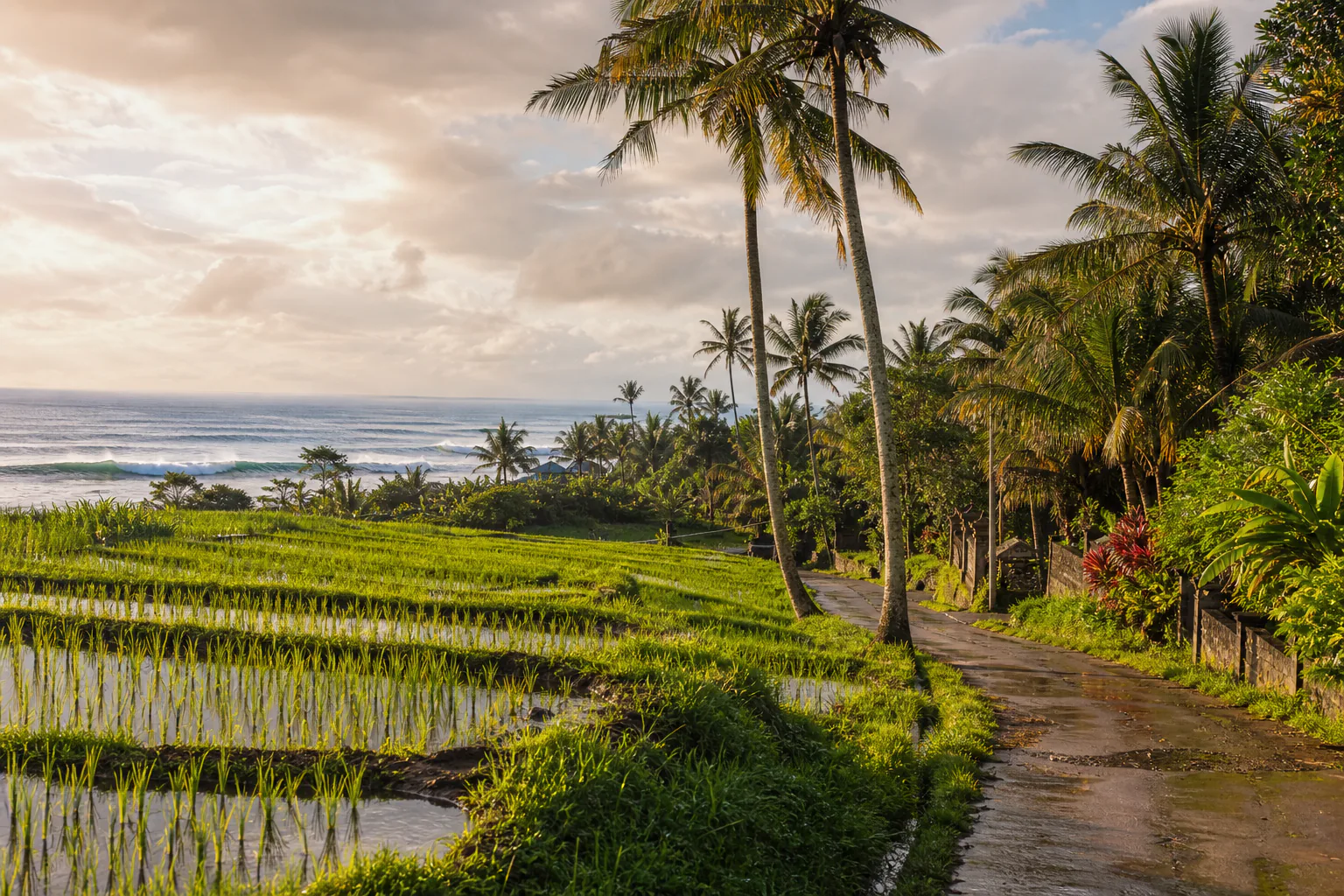 Canggu★ 8.4The densest nomad scene on earth, built on rice fields that are disappearing fast.3 districts
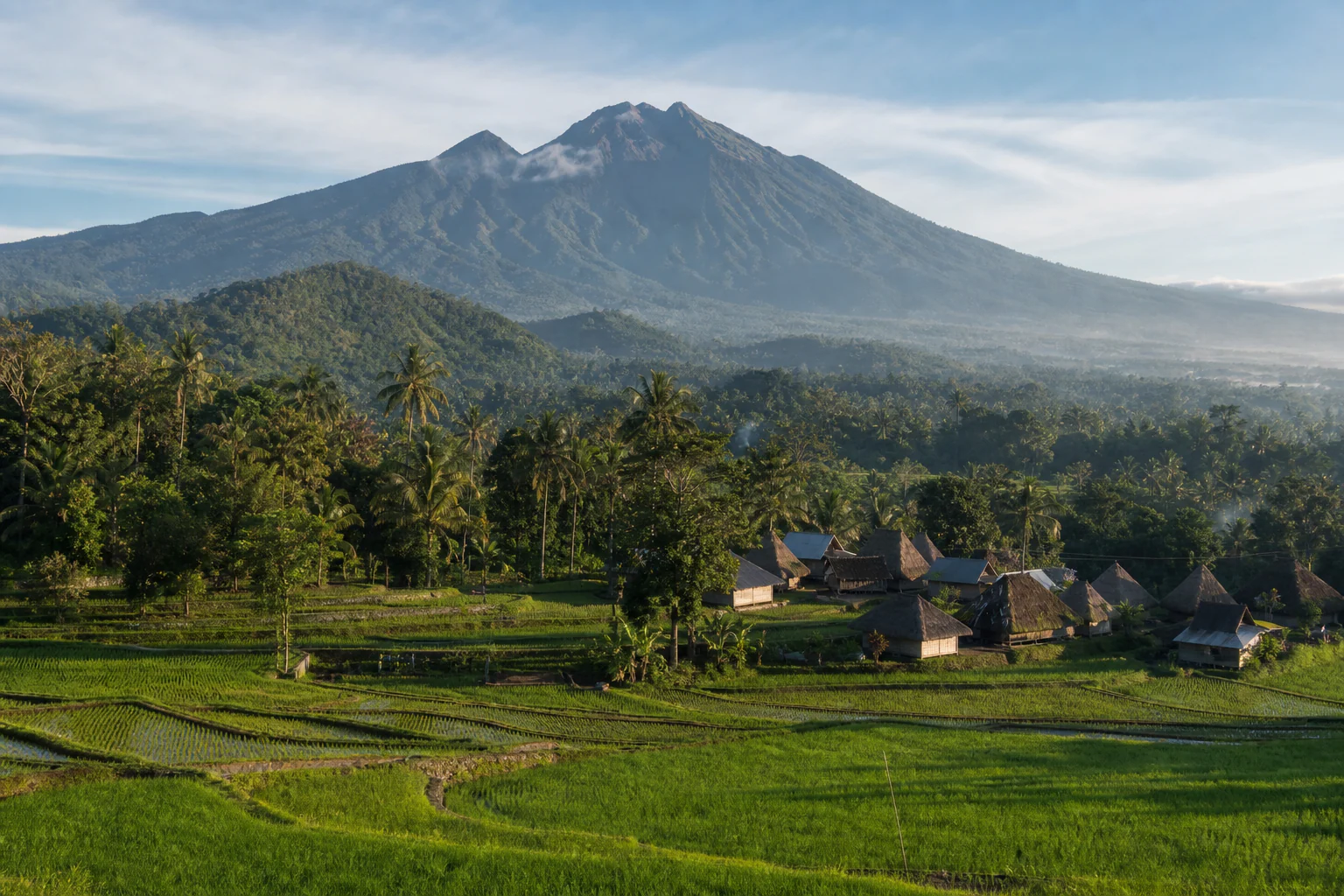 Lombok★ 7.8A rugged island alternative to Bali, with surf, open landscapes and a growing remote-work pocket around Kuta.
 Sanur★ 8.2Bali's calm, walkable east-coast base for families and long-stayers who prefer sunrise beaches to nightlife.
 Ubud★ 8.2Bali's inland counterweight: jungle, yoga, and a quieter kind of nomad.
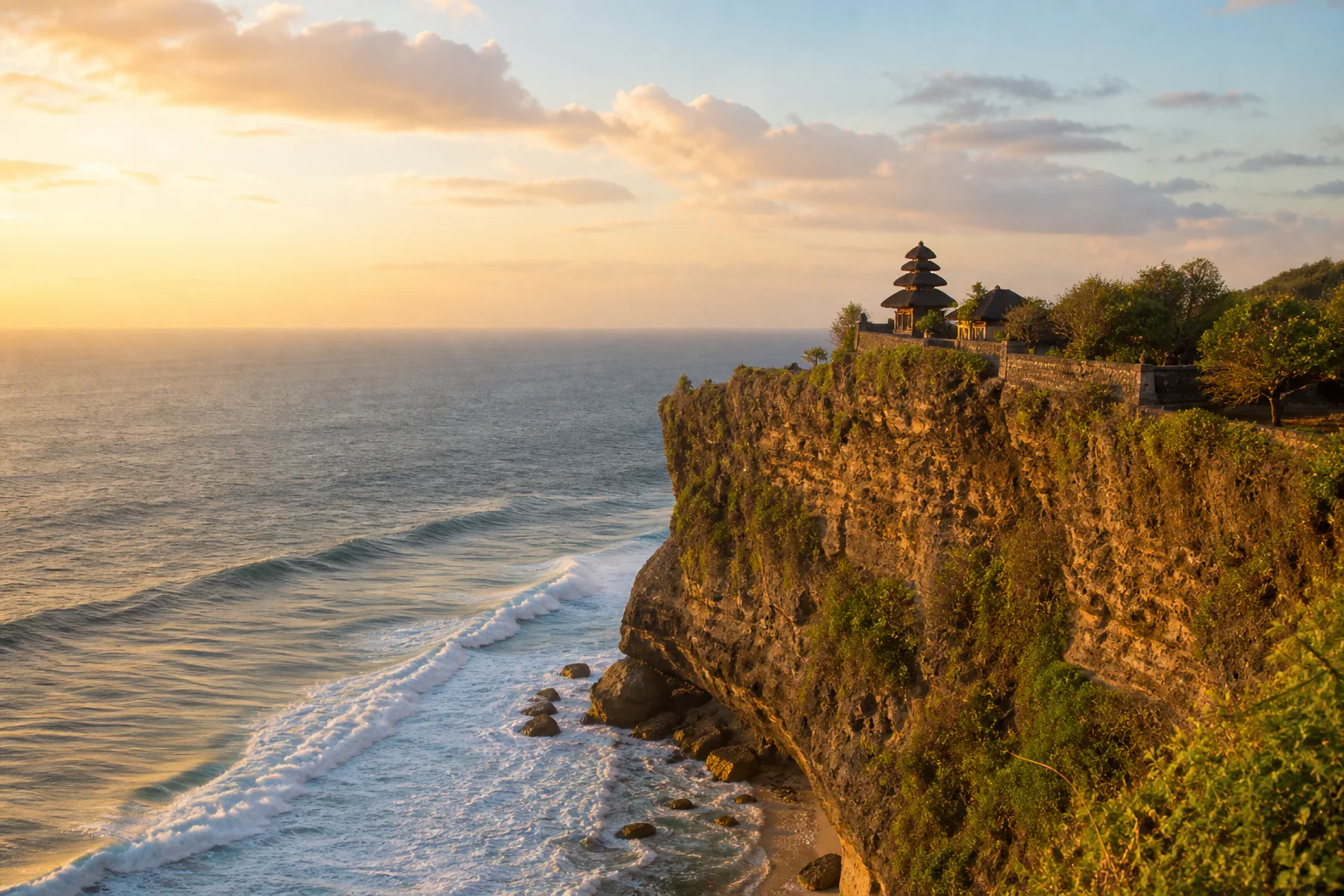 Uluwatu★ 8.0Bali's dramatic clifftop surf coast, with premium villas, a fast-growing work scene and beaches below limestone headlands.
Cost of living
USD
Lean
$900/mo
Shared housing, local food
Comfortable
$1,800/mo
Private one-bed, coworking
Premium
$3,500/mo
Central, frequent dining
Local currency
IDR
Housing
- Studio
- $400
- 1-bed centre
- $700
- 1-bed outside
- $400
- Coliving room
- $550
- Airbnb monthly
- $900
Everyday costs
- Local meal
- $2
- Mid-range meal
- $12
- Coffee
- $3
- Groceries/mo
- $260
- Coworking day
- $12
- Hot desk/mo
- $150
- Private desk/mo
- $280
- Transit pass
- $0
- Short ride
- $2
- Scooter/mo
- $70
- Gym/mo
- $60
Bali splits into two economies. Eating at warungs and renting from a local landlord is genuinely cheap; the villa-and-brunch version costs more than southern Europe. Long-term villa rentals are usually quoted yearly and paid up front, which is the biggest cash-flow surprise for newcomers.
Internet & connectivity
Fixed line
90 Mbps
Mobile
30 Mbps
Data plan
$8/mo
eSIM
Supported
Reliability
GoodPublic Wi-Fi
GoodPower stability
FairBiznet and Telkom IndiHome fibre reaches most of south Bali and Ubud at 50-300 Mbps. Villas advertise fibre that is sometimes a shared 4G router, so ask for a speed test before paying a deposit. Power cuts of an hour or two are routine in Bali.
Nomad community
Nomad density
Very highEnglish
GoodCoworking spaces
Outpost
$160/mo
Ubud & Canggu
Tropical Nomad
$150/mo
Canggu
B Work
$140/mo
Bali (multiple)
GoWork
$190/mo
Jakarta
Languages spoken
Meeting people
Bali runs on WhatsApp groups and coworking event calendars rather than formal meetups. There is something on every night in Canggu, from founder dinners to ecstatic dance, and the hardest skill is saying no.
The community skews toward e-commerce, coaching, content and crypto more than engineering. Jakarta's scene is corporate and local rather than nomadic.
Safety
Emergency 112
At night
GoodSolo female
GoodPetty crime
FairCommon scams
Scooter rental damage claims for pre-existing scratches
Money changers with rigged counting, outside authorised outlets
Police stops targeting foreigners without an international driving permit
Villa deposits taken for properties the 'agent' does not control
Women travellers
Solo female travel in Bali is common and generally comfortable. Outside Bali, dress more conservatively, particularly in Aceh and rural Java.
LGBTQ+
Bali is relatively tolerant in practice, but Indonesia is broadly conservative and Aceh applies Sharia law. Public affection is unwise outside Bali's tourist areas.
The realistic risks are road accidents, theft from unlocked villas, and dengue. Violent crime against foreigners is rare.
Healthcare
Consultation
$35
Pharmacies
GoodPublic system
Public facilities are basic and not a realistic option for foreigners beyond minor issues.
Private care
Private clinics in Canggu, Seminyak and Ubud handle routine care well. Serious trauma or complex surgery generally means evacuation to Singapore, which is why evacuation cover matters more here than almost anywhere else.
Insurance
Buy a policy that explicitly covers medical evacuation and motorbike riding. Both exclusions catch people out in Bali every week.
Getting around
Walkability
PoorPublic transport
PoorAirports
- DPSNgurah Rai (Bali)40 min
- CGKSoekarno-Hatta (Jakarta)60 min
- LOPLombok45 min
Bali runs on scooters, and there is no realistic alternative for daily life outside Jakarta. Gojek and Grab cover both cars and motorbike taxis cheaply, though some areas have informal local-driver monopolies that block app pickups.
Climate & seasons
31°C / 24°C
Tropical rainforest and monsoon
Rainy season
November to March in Bali and Java, with January and February the wettest
Air quality
Jakarta has serious air pollution year-round, frequently among the worst of any major capital. Bali's air is clean apart from traffic corridors.
Dry season from May to September is peak season for a reason: consistent sun, lower humidity and the best surf on the west coast.
All ratings
Getting in
Most Western passports can buy a 30-day visa on arrival (e-VOA) for IDR 500,000, extendable once by 30 days online. Longer stays need a C1 tourist visa applied for in advance, or a KITAS. All arrivals complete the electronic customs declaration, and Bali charges a IDR 150,000 tourist levy.
Visa run options
Singapore and Kuala Lumpur are both under three hours from Bali and cheap
e-VOA extensions are done online through the imigrasi portal without leaving
C1 tourist visas can be extended twice in-country, giving 180 days without a border run
Tax
Residency threshold
183 days
in any rolling 365 days
Income tax
5-35% progressive
Territorial system
No
Foreign income
Indonesian tax residents are in principle taxed on worldwide income. A concession introduced in 2021 lets certain foreign nationals with specific expertise be taxed only on Indonesian-sourced income for their first four years of residence, but it has conditions and is not automatic.
For nomads
The E33G KITAS is explicitly designed so the holder earns from outside Indonesia and is not taxed on that income locally, but crossing 183 days still makes you a tax resident with filing obligations. Get advice before your second year.
Social security
KITAS holders employed locally must join the BPJS health and employment schemes. Remote workers on the E33G are outside this.
Informational only, not tax advice. Indonesian rules on foreign nationals are unusual and worth a paid consultation.
Practicalities
Timezone
Asia/Jakarta, Asia/Makassar, Asia/Jayapura
Drives on
Left
Voltage
230V / 50Hz
Plug types
Payments
Cash for warungs and local services, QRIS QR payments almost everywhere else, cards in larger venues. Always carry small notes.
Tipping
Not traditionally expected, though a 5-10% tip is now common in tourist-facing businesses in Bali.
Banking
A local bank account requires a KITAS. Wise and Revolut work well, and ATM withdrawal limits are low, so plan around IDR 2.5-3 million per withdrawal.
Alcohol
Legal and widely available in Bali and Jakarta, heavily taxed, and restricted or unavailable in conservative regions.
Local customs
Bali is Hindu while most of Indonesia is Muslim, and expectations differ sharply between them. Cover shoulders and knees at temples, never touch anyone's head, and use your right hand to give and receive.
Watch out for
Scooter accidents are the single biggest risk to nomads in Bali, and most policies exclude riding without a licence
Bali traffic between Canggu, Seminyak and the airport can double journey times in high season
Rabies is endemic in Bali; any animal bite means immediate post-exposure treatment
Working on a tourist visa is explicitly prohibited and enforcement has increased since 2024
Sources
publishedLast reviewed 2026-07-27